Amanda Chantal Bacon on Creating Moon Juice and Her Health & Wellness Journey

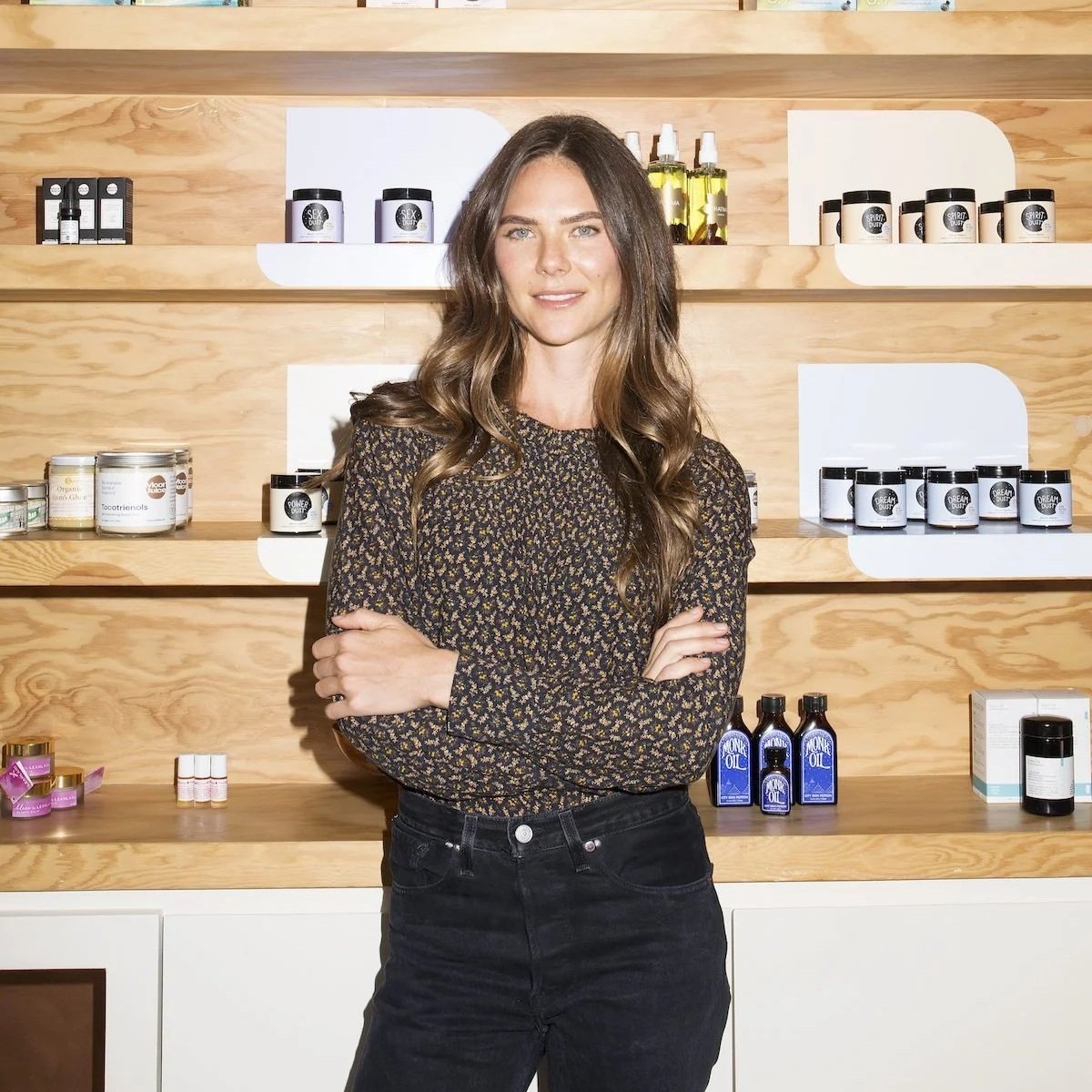
Today’s guest is Amanda Chantal Bacon, the founder of Moon Juice. Amanda founded Moon Juice in 2011 in Los Angeles as a juice store focused on educating her community on adaptogens and functional medicine. The brand has since expanded into a multi-category wellness company offering supplements, skincare, and lifestyle products, with distribution through major retailers and direct-to-consumer channels. In addition to building Moon Juice, she is the author of two books: The Moon Juice Cookbook and The Moon Juice Manual, which focus on functional ingredients, plant-based cooking, and wellness-oriented nutrition. She also graduated from the New England Culinary Institute. Under her leadership, Moon Juice has grown from a single local operation into an internationally recognized wellness brand, influencing how adaptogens and functional ingredients are used in consumer health, beauty, and food products.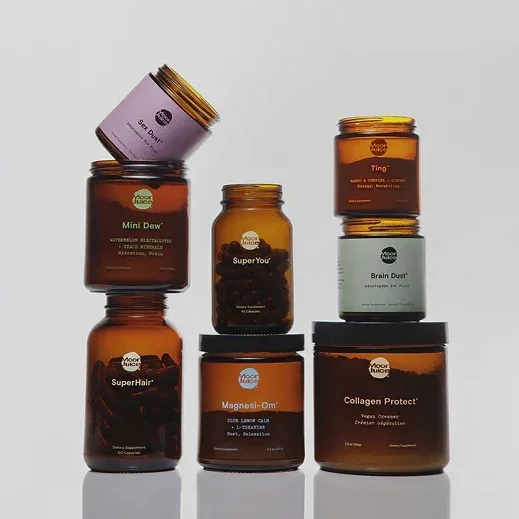
Conversation Transcript:
Lauren Stenger: Thank you so much for being here with me today. I'm super excited. I've been a fan of Moon Juice for many years. So this is really cool and I’m really excited to hear about your business journey with Moon Juice and hear about its growth and also your own personal health and wellness journey. So if it's okay, I'd like to just dive right in and I would just love to know what led you to create Moon Juice back in 2011, especially back in a time where supplements and adaptogens were just not as mainstream as they are now. So I'm sure that was definitely not as popular. So what kind of led to the creation of Moon Juice?
What led you to create Moon Juice back in 2011, especially back in a time where supplements and adaptogens were just not as mainstream as they are now?
Amanda Chantal Bacon: Yeah, so I always like to take people back to the setting of 2011 or when I was putting together, you know, this modest business plan. It was 2010. So I take people back to a time where there wasn't social media, I mean, there was Facebook, but businesses were not using social media in the same way. People didn't really know what almond milk was, this was pre-Califia, this was, you could not go into a coffee shop and ask for almond, oat, coconut, nobody would know what you were talking about. And so it's just a really different world.
And so for me, I had an autoimmune disorder. And it's something that I've put into remission. But it took a lot of expensive and esoteric appointments with experts and healers and, you know, TCM practitioners and Ayurvedic practitioners and all of these things that I just thought, okay, I'm living in LA. I'm spending all of my money doing this on the side. This is not a normal journey. Most people wouldn't do this. And I think most people wouldn't have access to this. So again, like you have to go back to that place that is pre-social media, now you can go on TikTok and everyone's talking about everything and you can really go down into these specific rabbit holes, especially with healing, which I think there are pluses and minuses to TikTok and information that's out there. But what I think is great is if you've got a niche problem, you can find your community. You can find doctors speaking to it.
Functional medicine was really not a thing at the time, which is such a thing now and there are so many apps and platforms and we're using AI to help us bring that forward. But again, it was me seeking out pretty esoteric fringe practitioners that were looking at this issue that in the West we call autoimmunity, and hitting it from different angles and teaching me to think about it in different ways. What I garnered out of that was that at the heart of every autoimmune issue is stress. And that could be trauma that's stored in the nervous system and in the body from childhood that you're no longer consciously aware of. Or it could be the stress of a virus that came into your body and really stressed your body out and turned on this autoimmunity. Or it could be the stress of all of these environmental toxins in your home that you're not even considering. So that was the foundation of really understanding my body and my condition in a new way.
“What I garnered out of that was that at the heart of every autoimmune issue is stress.”
And there were several changes that I made, and they were all quite pleasurable is what I found. So from mindfulness, to walking, to getting sunshine, to taking some things out of my life, which as a young person in my twenties, you know, taking alcohol out of my life was pretty radical at the time. I think we can see now there are a lot of people in their 20s that are choosing to take alcohol out of their life mostly, and it's not so radical.
But I did all of these things, and I wound up really changing my blood and hormone panels and no longer having an autoimmune condition and turning all of those autoimmune markers off. And I thought, this is pretty crazy. I did this in my home, it wasn't painful, and I feel better. I'm having a better life experience now. And this is something that endocrinologists and allopathic doctors told me was not a possibility. So that was really the birth of Moon Juice was how do we make this more accessible to people? How do I bring it to people?
“I did this in my home, it wasn’t painful, and I feel better. I’m having a better life experience now. And this is something that endocrinologists and allopathic doctors told me was not a possibility.”
I think today and in today's world, the way you would do it is getting on TikTok, getting on Instagram. But in 2010, the way that I was gonna do it was to open a storefront, and so that I could be there and really talk to people and introduce them to weird things like ashwagandha in their smoothie. It was bringing the adaptogens and the mushrooms and the minerals like magnesium and some of these lifestyle switches to people, but really it was a platform to educate people.
Lauren Stenger: Do you feel like when you were younger, you always like wanted to be an entrepreneur or do you think that was kind of just a result of this platform you've created and your passion for like finding solutions to your own health?
Did you always want to be an entrepreneur, or did that come as a result for finding solutions to your own health issues?
Amanda Chantal Bacon: You know, at the time I was not consciously chasing that. That was not a thing. I actually did not steadily go to a university. I did get higher education, and I actually went to Cornell for some time. I went to hospitality school while I was living in South America. I was able to do it remotely, which is a really weird thing to do in like 2004, probably. Probably earlier than that, probably like 2002 or 2003.
So no, I was not consciously saying I want to be an entrepreneur. And again, like I think we're living in a different time now. This is like post-girl boss era. This is social media. I feel like there was the rise in the early 2000s or, you know, 2010s of the female entrepreneur, like that hadn't happened. And so for me, I just felt like I’ve got something different that I want to do. It's not happening out there. There's no one for me to go work for. So I guess I'll just figure out how to do it on my own, which I think is basically entrepreneurship. And so I think that there are different ways you can go about entrepreneurship. And one is that like raw, I've got passion, I've got drive, I've got grit and I'm just going to figure out how to do it. And then there is a different version, which is more polished and educated, and you go to school, and you get business degrees and you really figure out how you're going to go about it and come up with a business plan and have that three to five year plan. I've seen both work, but both are valuable, probably coming from the same place, just different personalities.
Lauren Stenger: Yeah, no, I feel like the authenticity of how you created Moon Juice has maybe really helped with the longevity of the brand. It's has such a strong brand image. I feel like that's really important to have that authentic origin story with like your own testimony. So I think that's really cool.
Lauren Stenger: And then I was wondering, how did you decide on the name Moon Juice? Did you have other options or like, what was it about Moon Juice that really stuck for you?
How did you decide on the name Moon Juice?
Amanda Chantal Bacon: Yeah, I actually was pursuing another name and, you know, went to protect the mark and had worked with someone to make a logo for it. And it just, I don't know, it didn't feel right. And then I was actually in San Francisco. I was in North Beach and it was a really foggy, cloudy morning and I was standing at a little coffee shop. It was a while ago. So it was like when North Beach was, there was like just this renaissance happening there and such a cool little coffee shop that I don't think is there anymore. Then out of the fog from the beach coming down came this beautiful hand painted school bus. And it was just this hand painted night sky with a big full moon painted on it. And in that moment, you know, a voice dropped in and said, Moon Juice. And I was like, oh wow, didn't necessarily come from me, but I think that's the name. And just ran with it.
Lauren Stenger: That's so cool. I feel like there's kind of like a dichotomy, if you will, with being a wellness entrepreneur because I like the business world is so fast-paced, you know, kind of cutthroat, the values and the principles of wellness don't really resonate a lot with business and investing and all that. So how do you kind of manage prioritizing your own wellness routines versus, you know, being in the business world?
There seems to be a dichotomy in being a wellness entrepreneur. How do you stay grounded and keep your values intact while being a businesswoman?
Amanda Chantal Bacon: That is a really astute and excellent question, and I think not one that I got ahead of. And so it's actually something I've really had to reckon with, especially in this last year. But I think when I started Moon Juice, I was in my 20s, and I just had a new baby and had a lot of excitement and had a lot of energy and there was a lot of momentum. And so I think you operate at that level of just excitement and creative force for so long. I've been going hard for 15 years now, and so I think like the first five years you can go really hard like that.
At a certain point, as the business gets bigger, I mean, I say with like any business, as the business grows and becomes bigger, you can no longer operate as just like a passionate founder that's going to burn the candle at both ends, and you're going to like figure everything out and try to fix everything. There is a point at which the business needs to become sustainable without that kind of energy. And that really requires you to have the right team. And so I went through a few years there in the business where I did not have the right team. The business was a beast and I was still trying to show up like an athlete and with passion and just work hard with my body. That didn't serve the business and it really did not serve my body anymore. And so you can only go so long and the body will whisper and then it will talk and then it will start screaming at you. And so I could witness that that was happening but needed to do things like bring the right people into the business, and sometimes that takes time to have a new strategy that did not require that type of physical and mental labor that takes you over the edge. So that was a lesson I chose to learn the hard way rather than the smart way. And yeah, it was an experience, but, all I could say is for anyone who begins to hear those whispers, it's probably a sign that you need to do something very differently or you need to call in better help and rethink the structure of the team.
Lauren Stenger: It’s probably hard to really listen to that whisper, but it sounds like it's important for it starts screaming at you. So that's a good preventative tip.
I'm curious about like your own wellness routine, because you seem like you have a really strong, like holistic wellness routine. What are some of your, I don't know, maybe daily or maybe not daily, but what are some of your habits that are just essential for your lifestyle and what are some non-negotiable habits?
What are some of your essential wellness habits?
Amanda Chantal Bacon: Yeah. Sleep. I mean, I know it's so boring. Everyone's heard about sleep so much over the last, you know, in particular five years. But that was another hard-earned lesson is there was a time in which I was not getting adequate sleep, but I was choosing to stack all of these expensive, kind of like frivolous and crazy wellness practices in lieu of just sleep that were expensive, time-consuming, extra, and then not even working because I didn't have the foundation of sleep. So the things that I was doing to try to fight off inflammation and combat spiked cortisol probably actually even made things worse there for a bit. So if I go back and think about a period of time that was really not working, it was doing high-intensity exercise several times a week because that felt crucial to my wellness. Not enough sleep, not enough rest time.
And in particular, as a woman, spiking my cortisol like that on an already stressful day, single parenting, a toddler, not enough sleep, and then breaking my neck to drive to a studio to do that, and then feeling even more stressed because I had taken time out of the work day to do that, and making up work later at night when I should have been sleeping. That all really spiked my cortisol and then started to affect other hormones. Like on top of the working out I was doing cryotherapy and tons of acupuncture and just like more time and effort and investment. And when I actually scaled back on all of those things and prioritized sleep and gentle movement that could happen with a child, that could happen right outside my house, it could happen early in the morning, late at night. That was a huge thing. And I got to drop a lot of the more like expensive practices that were targeting something that was no longer there.
So, you know, I have to say after trying so many crazy wellness things over the last 20 plus years, I always come back to nervous system regulation, and sleep really being at the foundation of that. Saying no to a lot of things really being at the foundation of that. One of the things I've come to realize is that we think of all of these negative stressors like loss of sleep, too much work stress, all of that. I actually realized that biologically, excitement and activity that we might relate to positively can start to fall into the same bucket for your body and nervous system. So for me, I know that if there's a lot going on at work, I can't say yes to all the social plans. There is a point at which saying yes to every friend, and every coffee, and every event, and every social thing starts to really deplete my battery in a way that even though I enjoyed all of those things, I wanted to do them all, it starts to put me into a deficit.
“I have to say, after trying so many crazy wellness things over the last 20 plus years, I always come back to nervous system regulation, and sleep really being at the foundation of that.”
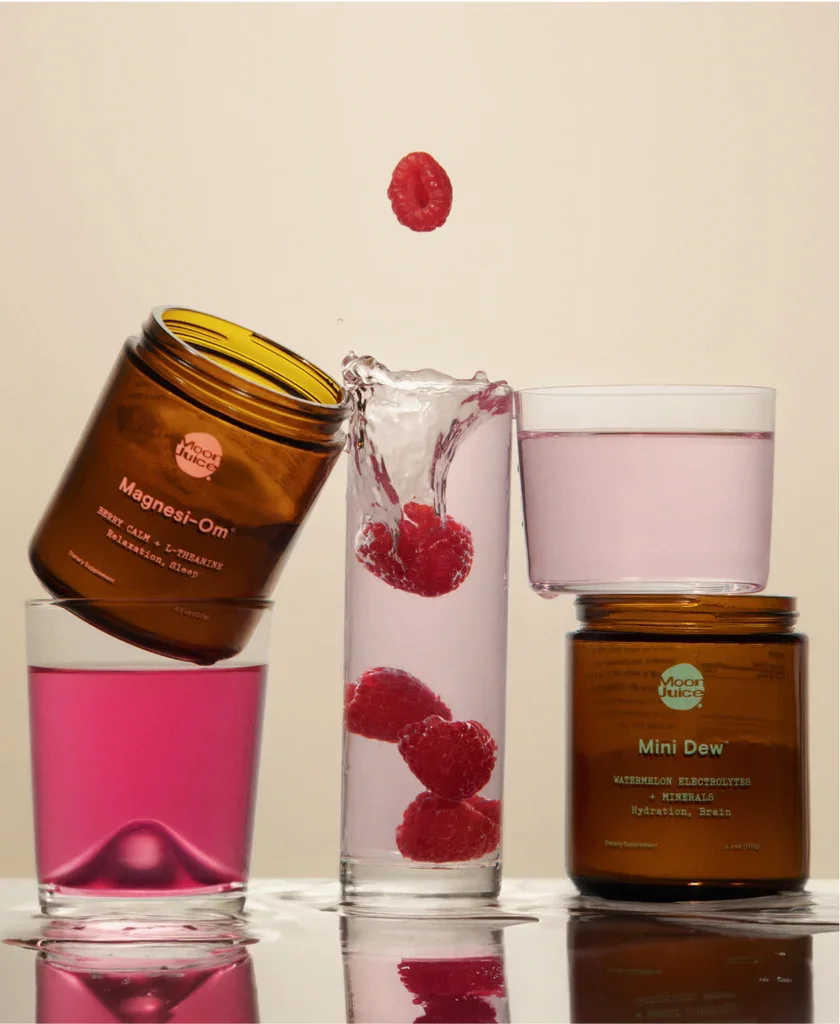
And so, you know, there are like regular wellness things that I do. I take SuperYou every day. I take SuperBeauty, which is a formula with glutathione and vitamin C so I get that antioxidant network going every day. So I think of SuperYou really like a buffer for my endocrine system and helps to reduce cortisol. I take that antioxidant system again, as a buffer for all of the oxidative stress, the pollution, the stuff in our food, everything out there really helps the body. And then I do Magnesi-Om every night. I'm a big “sleepy girl mocktail: fan, I do my sleepy cherry magnesium every night.
So I kind of like do those things that you expect me to do. I take all of our formulas in a day, I do Sex Dust every day for hormonal health. But then really outside of that, it is a lot of nervous system regulation. So that's what I need in particular. I think everybody's different and gonna have their own thing. I use acupuncture regularly as a way to just override the system and help the system. I have something called a BioCharger in my house that's like an insane machine. You guys can go down the rabbit hole and check that out. That's been really, really helpful for me.
And then simple stuff, sunshine, touch grass, a little bit of walking. I make sure to leave room and time for hugging and kissing. So again, sounds so silly, but what that does for my brain and my nervous system to just receive those hits of oxytocin regularly throughout the day for my system and body to feel like I am safe, I am loved, all of those chemicals that are created, I find to be really helpful. I also leave time and space for, you can call it prayer, you can call it meditation, like whatever works for you. don't think you necessarily, I don't need, like an app and a program and an altar and a thing. I can just kind of drop in. So leaving time and space to drop into the stillness and to touch something greater than the 3D of the whole day.
“I make sure to leave room and time for hugging and kissing. So again, sounds so silly, but what that does for my brain and my nervous system to just receive those hits of oxytocin regularly throughout the day for my system and body to feel like I am safe, I am loved, all of those chemicals that are created, I find to be really helpful.”
Lauren Stenger: Do you feel like that took you a while to kind of find what works for you to kind of like develop what is like best for your own mind and body?
Did it take you a while to find what habits work best for you?
Amanda Chantal Bacon: I do. I think it took some time to figure it out and to get into flow. And then I think what took even longer, which it doesn't need to take this long, and I feel like the conversations that are being had and the conversation that we are having today together is very different than any conversation I was having at your age or conversations that I was hearing. But the thing that I think took me way too long, and I hope that this can change for people, is that, I'm going to say as a woman, and that is my perspective, I do also think there's social conditioning for women in particular, where it was really hard for me to say no. It was really hard for me to advocate for my well-being in a way that again, I think it took too long.
It really took till I turned 40 and being in my 40s for me to be able to say, “I have overextended myself. I'm going to have to say no to these things.” I think there's like an element of people pleasing in there. I think there's an element of just being conditioned to say yes and to accommodate people around you and do the right thing and not be tired and not need to take time for yourself. And so that is something that I wish I had had that earlier in life. And so I think there is part of it is just finding a tuning to what works for you, getting into flow, what that looks like, what your space and time looks like what feeds you the most, but then being able to advocate for that, to leave enough space and time, for me was the hardest part.
Lauren Stenger: Yeah, because I feel like to know what you need to say no to you really have to be in tune with your own self and you have to know what you value and prioritize and that can be hard to do sometimes.
Amanda Chantal Bacon: And a sense of worthiness. It's pretty bold. What I have found is saying, no, I need to take this space and time to do this ritual for me that maybe is like socially not celebrated. But for me, that looks like I need to take a bath. I need to sit in silence. I need to have some warm food. I need to tap into a different frequency all by myself, those are not things that are encouraged in our society. I don't think people are out there on social media really glamorizing that. So for me, it came into a place of worthiness, self-worth, intuition, and being able to say I am worthy of disappointing and saying no to people and things around me so that I can take this 4 hour chunk of time to not be productive and not be pleasing others to just regulate.
“So for me, it came into a place of worthiness, self-worth, intuition, and being able to say I am worthy of disappointing and saying no to people and things around me so that I can take this 4 hour chunk of time to not be productive and not be pleasing others to just regulate.”
Lauren Stenger: Yeah, that's hard to do, but that's definitely great advice for like everyone to work on, especially I mean, I'm 22, so like if I can learn that early in my life, you know, that could save me a lot of heartache and headache.
Amanda Chantal Bacon: It can, and I think if you get that in your system now, I think you can approach how you show up at work in a particular way. I think you can set up the dynamic in a partnership, a marriage in a specific way. I think you can begin to parent in a different way. You know, and like not have to get to the point where you are fully overwhelmed, fully burnt out.
Lauren Stenger: Totally. I was kind of curious. I've seen in the media, Moon Juice has been described as having “cult-like following”. I'm kind of curious, like what do you attribute that brand loyalty and retention to? Because I think that's really hard for brands to have.
Your brand has been described as having a “cult-like following.” What do you attribute that brand loyalty and retention to?
Amanda Chantal Bacon: One is efficacy. I really couldn't stress this enough, the products need to work. And I think, we've sailed past this as a business, but there was a time in which business people would look and say, “Your products are too expensive. Nobody's going to pay that. Nobody's going to continue to pay that. Nobody's going to prioritize their wellness in that way.” And I think it's really interesting, one of our top SKUs our Magnesi-Om is significantly more expensive than other options that are out there. And yet it remains to be a number one seller on Amazon.
And I just, again, like I cannot stress enough to a huge part of the brand blueprint and the reason of us existing is that they are clean formulas and that they are highly efficacious formulas and means they're more expensive. And I've always had faith in our community that they're coming to us because they are educated and they can feel it working in their body. And they're absolutely going to prioritize that, you know, extra $20 a month, $30, whatever it is to have something that they can trust and that they can feel. And so I really do think that's at the heart of it.
And then the other thing is we've been around for a long time. It's been 15 years. And so I think when you do know your community and you speak directly to them and you continue to speak with them and they grow up with you and you continue to surprise and delight them with new formulas that are going to work like, it's a journey, it's a relationship, it's a long relationship with some people we've had.
Lauren Stenger: Well, thank you so much for your time. This was really insightful and I loved learning about your own journey with Moon Juice and your own health journey. So thank you so much.
Amanda Chantal Bacon: Thank you so much for reaching out. So nice chatting with you and so exciting that you’re having these conversations and thinking about these things at 22 and again, like not waiting for the car crash that has to happen, but wherever you go in your own life, like really asking the questions of how do you stay healthy in entrepreneurship?