Healing at Scale: James Gordon on Mind-Body Medicine and Transforming Trauma
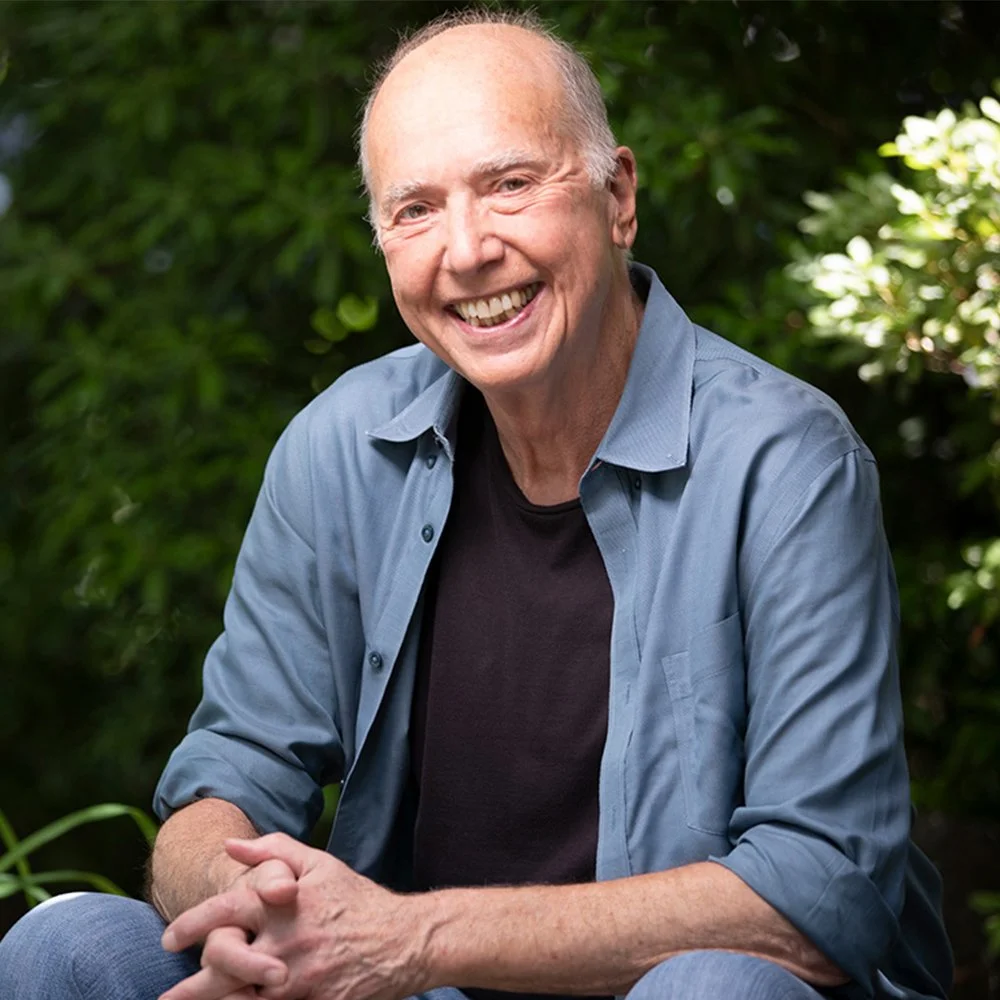
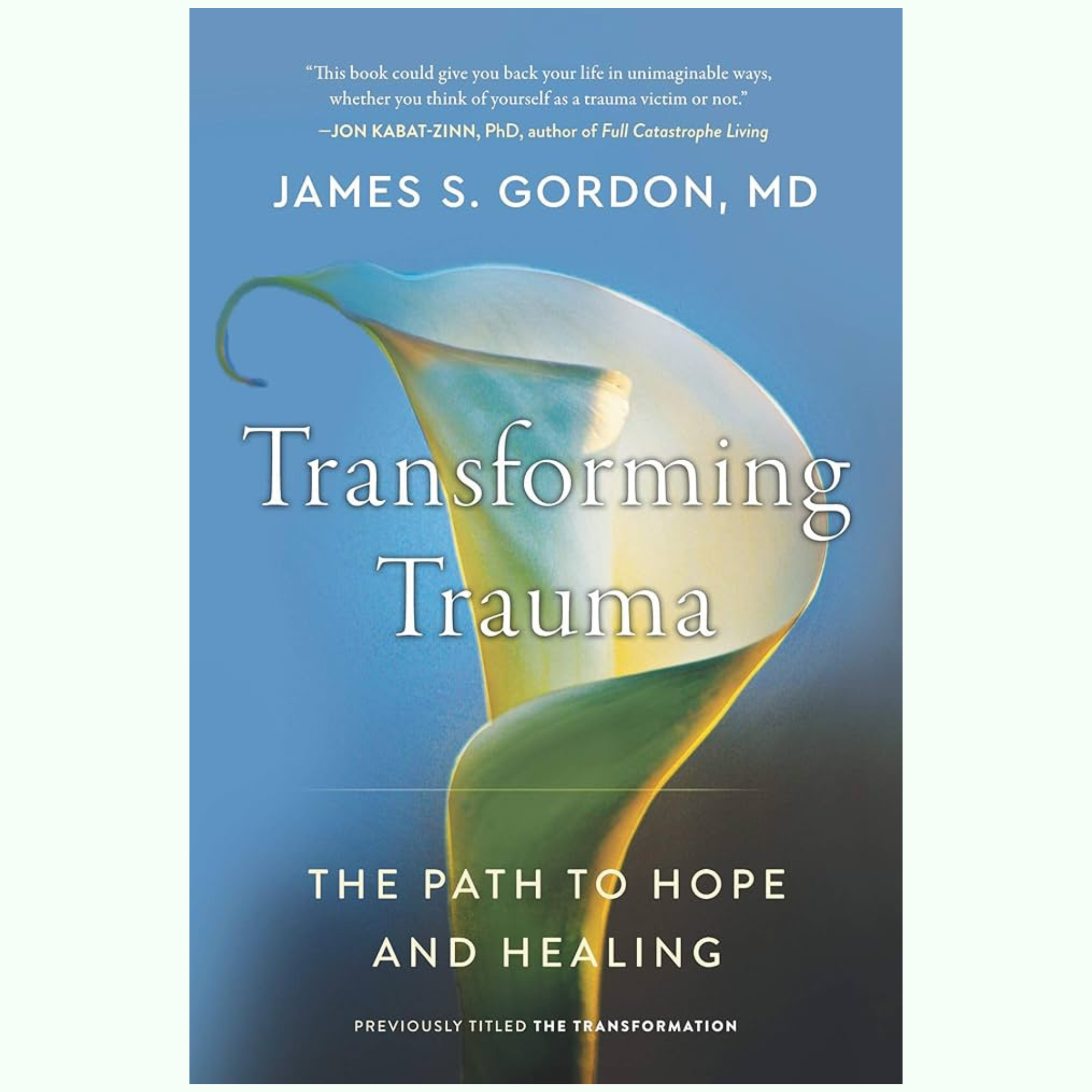
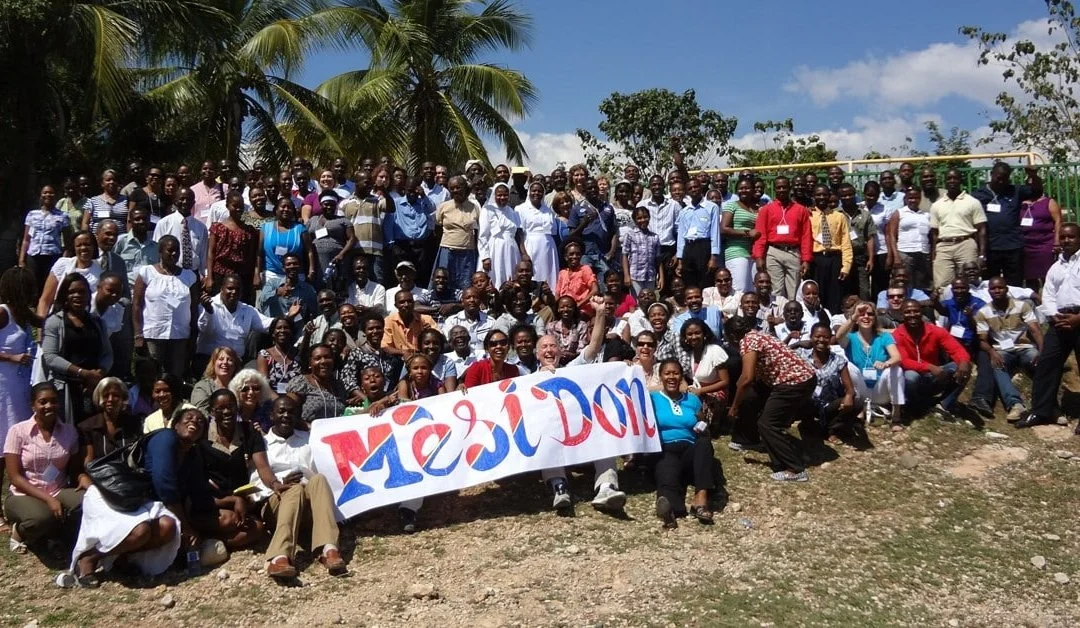
Dr. James Gordon is a psychiatrist, researcher, educator, and founder/CEO of The Center for Mind-Body Medicine, a nonprofit that teaches evidence-based support techniques to help communities heal from population-wide trauma using a mind-body medicine model of self-care, self-awareness, and group support. CMBM has helped hundreds of thousands of people around the world. These people include children and families in ongoing conflict zones, survivors of mass violence, military veterans, survivors of natural and climate disaster, and so many more communities. He also is a clinical professor in the Departments of Psychiatry and Family Medicine at Georgetown Medical School and served as chairman of the White House Commission on Complementary and Alternative Medicine Policy. His most recent book, Transforming Trauma: The Path to Hope and Healing, presents an evidence-based mind-body program that uses self-care practices to heal the psychological and biological effects of trauma. He has published over 150 articles and has been featured in publications like The New York Times, The Washington Post, The Atlantic, and Forbes Magazine, as well as on CBS 60 Minutes, NPR, and more. He received his MD in psychiatry from Harvard Medical School.
What initially drew you into the field of psychiatry, and what interested you about pivoting away from traditional psychiatry?
Lauren Stenger: What initially drew you into the field of psychiatry, and then more specifically within that, what interested you about pivoting away from traditional psychiatry?
Jim Gordon: Well, I’m always interested in people’s stories. I grew up in New York City, and people in New York talk a lot and tell a lot of stories. I was the kind of kid where I’d be on the bus or the subway, and some disheveled person would sit down next to me and say, “Hey kid, you want to know what the secret of the Universe is? And I’d say, “Sure, why not? Of course.” I'd love to read books, and I'd love the whole element of watching how people's lives unfolded. So that got me interested in psychiatry. My father was a surgeon and one of the best things about him, he's not an easy man, but one of the best things about him was the way he was with his patients. He was in many ways more compassionate and thoughtful with them than he was with the family. So I thought, that's a good thing. And I wanted to do something useful for people. So I thought, well, being a doctor, I'll be useful for people. I like being there when people are going through challenging times and trying to be helpful to them during those times. So that's the kind of background that got me into medicine and psychiatry.
I read Freud when I was 16 and read introductory lectures on psychoanalysis, and I thought this guy is amazing. My first hero, after the athletes who were my heroes when I was young, was Socrates. I thought what he's doing is quite incredible getting people to think and he doesn't seem to be worried about money he's just going around and talking with people and he's kind of funny and he's interesting and he was a soldier and he's a kind of cool guy. And then Freud seemed to me very much in line with Socrates, except he was a physician and a psychiatrist.
“That metaphor of ‘mental illness’ didn’t seem entirely appropriate to me. So from the beginning I was questioning and looking if there is another way to understand people.”
So I was headed in that direction, but I also was very impatient with the kind of reliance on a biomedical model, particularly initially with people with psychological problems. People who are having problems in living, they were treated as if they had type one insulin dependent diabetes. That metaphor of “mental illness” didn't seem entirely appropriate to me. So from the beginning I was questioning and looking if there another way to understand people. I got interested in the work of existential psychiatrists and in particular the work of somebody whose name you probably don't know, R.D. Lang, Ronald Lang. Now, 60 years ago, if you were interested in this whole field, this whole challenge to psychiatry, you would know his name very well, but he's kind of disappeared from popular consciousness. A wonderful quote of his, is, “Psychotherapy is the obdurate attempt of two people to discover the wholeness of being human between them.” And I'd like that. It is a much more of a kind of democratic, exploratory, mutual relationship.
Lauren Stenger: Something I really liked in your book Unstuck is how you talked about depression in a different lens, talking about it through the hero's journey. It’s nice to have a different lens on how we view mental illness and mental health. So for those who may not know, could you kind of give a brief background on what mind - body medicine is?
What is mind - body medicine?
Jim Gordon: I'm glad you brought up depression because still, depression is primarily viewed as a biomedical disease that requires pharmacological treatment. And the fact is that pharmacological treatment, although it may help some people, is not needed for the vast majority of people who are depressed. And I neither needed nor wanted it when many years ago when I was in medical school, I had an episode of depression, and depression became a great teacher for me.
Okay, let me move into mind-body medicine. There are basically two aspects. One is the biological reality that every thought we have, every interaction with people, every emotion we have, can affect every organ and cell in our bodies and vice versa. And that rhere is a continual conversation going on at a molecular, biochemical, and physiological level among all the organs and all the cells in our body and our thoughts, feelings, sensations and our relationship with the outside world. So that's first part of mind - body medicine, that the mind and body are completely interconnected.
“There is a continual conversation going on at a molecular, biochemical, and physiological level among all the organs and all the cells in our body and our thoughts, feelings, sensations and our relationship with the outside world.”
That’s the diagnostic part, the second part is the therapeutic part, which the understanding and my experience over the last 50 years is you can enter in a positive way into that conversation that's continually going on among all the cells and all the organs in our bodies. And that you can use techniques like slow deep breathing to quiet anxiety to be the antidote to the fight or flight response, lower blood pressure, decrease pain, that we have a wide variety of self-care techniques that are called mind-body techniques, where we can positively influence what's going on in our bodies and in our minds as well as the way we think and feel and look at the world and relate to other people.
So the Center for Mind-Body Medicine, which I created in 1991, is an organization grounded in the understanding of the biological reality and the understanding that all of us have the capacity to enter into that biological reality and to make positive changes, therapeutic changes.
Lauren Stenger: So back in 1991 when you founded your center, did you kind of have a hunch or like a vision that it would be so scalable and so able to be implemented to so many different cultures and languages and so many different walks of life? Or do think that kind of just kind of gradually happened as you kind of expanded?
Back in 1991 when you founded the Center for Mind- Body Medicine, did you realize that the program would be so scalable and able to be implemented in so many different cultures and languages? Or did that gradually happen as it expanded?
Jim Gordon: It's a great question and it happened gradually. And after about five years of using these tools and techniques for the Center for Mind-Body Medicine, and I encourage our listeners to take a look at our website, cmbm.org. Our work is all about teaching and training and teaching people. Initially, it was focused on physicians and mental health professionals, teaching them this whole array of self-care techniques and teaching them and giving them the experience of the techniques and also of small groups, which are the best way to learn these techniques and to share experience with other people. So I began to do that here in the US and it was working very well. We had a particular focus on training medical school faculty and at Georgetown where I'm a clinical professor, but also in many other medical schools. People began to bring our work back to the medical school, back to their clinic, back to their hospital, back to their private psychotherapeutic practice, and it was very helpful. They were integrating what we were teaching, self-care and group support, into their ongoing work and doing a good job of it and liking it. And I began to wonder, can this also work in some of the most troubled places on the planet? So that was a question.
“They were integrating what we were teaching, self-care and group support, into their ongoing work and doing a good job of it and liking it. And I began to wonder, can this also work in some of the most troubled places on the planet?”
And so I said, “Well, let me go to some of those places and let me share what I have to offer with people there and see whether or not it works.” And lo and behold, it did. Initially, I had that experience with former child soldiers who happened to be all men in Mozambique at that time. They'd had the worst things done to them and they in turn had done the worst things imaginable to other people. And they had stopped being child soldiers and they were totally at a loss, totally traumatized, but they could use these techniques. Then I went to South Africa and worked with families who'd lost family members during apartheid. Same thing, also very different culture, but they could learn and use the techniques. So it was a kind of, okay, it looks like it worked.
I loved working in Africa, people were extraordinarily receptive. But I thought in a way, it's kind of a funny thought perhaps, this is too easy. Let me go to some place where people have been killing each other or hating each other for hundreds of years. So I went to the Balkans shortly after the war in Bosnia ended and began to work in Bosnia. And I could see the benefits, but the whole society had been shattered by four years of war. Rates of chronic illness, alcoholism, abuse of women and children were off the charts. And the healthcare system was very rigid as well as very fractured. So it became clear to me that the time to work with people is when the trauma is happening. So a colleague and I, she was a family physician, went to Kosovo as soon as the war started and we began working in the middle of war. And what we saw is that our techniques work there. And ultimately, Kosovo became our pilot program.
We trained 600 people in Kosovo and in this model of self-awareness, self-care and mutual support, including everybody in their community mental health system. And that model now became back then one of the pillars of the community mental health system, and it continues 25 years later. It became clear that I went to many, many places, worked with many groups. Can this work with veterans who are bound to be skeptical of anything touchy-feely? Well, after a little skepticism, once they tried the technique and they saw the difference they could make, they said, all right, this works. I'll spare you their expletives, but this works. Same thing with cops, firefighters. We worked with firefighters after 9-11. New York City firefighters who had lost 300 of their brothers in 9-11. So yeah, it worked in many, many places. And now we're back in Sahara in Africa, working in half a dozen different countries. And people get it. And that's partly because the method is drawn from many cultures around the world, and we combine it with the insights and the knowledge of modern science, and we study it scientifically. So people recognize, this is like something my ancestors used to do, this shaking and dancing, I remember that. There's something like in the Quran. So everyone is finding on their own that correlates between what we're teaching and what they've experienced and what they believe in.
“The method is drawn from many cultures around the world, and we combine it with the insights and the knowledge of modern science, and we study it scientifically.”
Lauren Stenger: Is there a particular story of healing that's really stuck with you throughout your travels and working and training people?
Is there a particular story of healing that's really stuck with you throughout your travels and working and training people?
Jim Gordon: Yeah, there's so many things. I encourage people to read my most recent book, Transforming Power, A Path to Hope and Healing. It's out in HarperOne, it's paperback, it's inexpensive. It tells dozens of those stories and provides the science and gives the context for all of this. One story that I do tell in there that our listeners can check out on our website because it's covered by CBS 60 Minutes, but I'll tell her story briefly. It's very striking and particularly relevant to this time. This is a little girl in Gaza. We have parallel programs in Gaza and Israel, parallel trauma healing programs. We're the only organization that has such programs.
Anyway, this is in 2015, after the 2014 war. There is a group in Gaza of 8 to 10 year old kids, all of whom have lost their fathers in that war. And in that group, there's a nine year old girl named Azar Jendia. In the first group, whether we're working with kids or adults, we ask all the small group members to do some drawings. Draw yourself with your biggest problem. Draw yourself with the solution to your problem. Azar combined the first two drawings in one. She drew herself as a little girl with her mouth turned down, little tiny stick figure off in the corner of the page. In the middle of the page, there were bodies lying on the ground. Her father covered in red, covered in blood who had been killed. Two uncles also covered in red and an aunt also. All of them had been killed in this war. Her home was falling. Stones were falling off her home. And Israeli planes were flying overhead, dropping bombs. That was the Azar with her biggest problem. The death of all these people she loved, the destruction of her home, herself as this tiny, almost insignificant figure. The solution to her problem, and usually when people do these drawings, the solution is optimistic and hopeful. Oh, you know, maybe I can make money or maybe I'll feel better. She drew herself in the grave with her father and she said, “There is nothing for me in this life. The only thing for me is to be with my father.”
She did nine sessions. She did these self-care techniques. She did mental imagery. She did mindful eating. She did soft belly breathing to quiet the fight or flight response. She did shaking and dancing to get rid of her stress and to sort of loosen up her tight little body. In the ninth group, she did another set of drawings. The first drawing she drew herself, she was a big girl in the middle of the page with these beautiful brown curls, and a smile on her face. There was an arrow coming from her chest through a heart. She drew a heart and in the heart she wrote in the English she was learning in school, “I love nature.” And the arrow headed toward this big tree, green. World peace for the world and with blossoms, beautiful red blossoms on the tree. And she says, “Now that I've been in this group, I love myself and I love life and I love nature.”
The second drawing was about what do you want to be, which was sort of equivalent to the solution to your problem. She drew herself in a white coat with a stethoscope in her ears, lying in front of her on a table. The second was a figure and the table looked very much like the grave in the first drawing. But now it was a table and lying on that table was a person.
And if people look on the website, they can see Scott Pelley, the interviewer for 60 Minutes, asks her, “Who's this?” And Azar drops a big smile and she says, “That's my patient. Ever since the war, so many people have had their hearts hurt and I'm a doctor and I'm taking care of my patient.” And then Scott said to her, as I did, “Well what about these five other fingers standing around?” And Azar says, and the smile gets much bigger, she says, “These are my other patients, they're waiting for me.”
“...Scott Pelley, the interviewer for 60 Minutes, asks her, ‘Who’s this?’ And Azar drops a big smile and she says, ‘That’s my patient. Ever since the war, so many people have had their hearts hurt and I’m a doctor and I’m taking care of my patient.’”
And then how she's going to get there, the third drawing, she draws herself at a desk with books piled up on the desk. I'm going to go to medical school. Fall of 2023, eight years later, Azar had been just about the best student in her class in high school, and she was getting ready to go to medical school when all the medical schools in Gaza were destroyed by the war. That's what's possible.
This is not just Azar. There was a little boy in the group and in the first drawings, the solution to his problem, he drew himself with a suicide belt on. And I said, “What's going on?” And Scott Pelley said, “What's going on?” And he said, “I'm going to become a Shaheed, a martyr, I'm going to kill Israelis. They killed my father.” In the ninth group, he did another picture, which you won't see in the 60 Minutes segment, which didn't appear, but I saw it and he was driving a car. And I said, “What's going on?” And he said very proudly, “I am the driver for the first president of Palestine.” So that kind of transformation from wanting to die to living a creative, productive life is possible. And that's my hope, even after the terrible destruction of this current war, that the same possibility will be there for the kids in Gaza as well as for the kids in Israel.
Lauren Stenger: Wow, that is an incredible story. And I definitely encouraged all the listeners to go check out like the 60 Minutes and your book and all of that because I'm like, I was trying like not to cry over here. That is like an amazing story, my gosh.
Jim Gordon: Crying's okay. I sometimes cry when I tell the story or when I see that segment.
Lauren Stenger: Well my next question is, throughout your career, I'm sure you've heard countless of these really intense, emotional, impactful stories. How do you take care of your own self and how are you able to absorb all of these super intense stories. Additionally how this might be too big of a question, but like how has your career impacted your outlook on daily life. I mean, I just can't even imagine.
Throughout your career, you've heard countless of these intense, emotional, impactful stories. How do you take care of your own self, and how are you able to absorb all of these intense stories? How have these stories impacted your outlook on daily life?
Jim Gordon: Those are really good questions. First of all, I use all the techniques that I teach in Transforming Trauma, all the techniques that I teach to other people. I've used them myself. I wouldn't teach anything to other people that I haven't tried for myself. So I'm continually, you know, I'm doing soft belly breathing before I go into a meeting and I start the meeting with other people with soft belly breathing. If something comes up and I'm feeling, you know, angry and frustrated as I am often enough. I do something, I get up and I shake my body or I scream and I shout and I put on some music and I dance or I use guided imagery. If I don't know what to do and I'm puzzled, I use a guided imagery that I teach in Transforming Trauma that we teach in all of our trainings and all of our groups. I consult my wise guide, my imagined inner wisdom or intuition. I use all those techniques.
When we're doing a program, whether it's in Ukraine where we've been working or Gaza or Israel or here or anywhere else, at the end of the day, all of us who are leading the program, all of our staff and all of our faculty who are leading groups, we get together and we share our experience with each other. We share the pain as well as the triumphs, the great things that happen. But we also share our anxiety, our fear, our difficulties, and our challenges. So those are basically the ways.
Also, having a sense of humor is very important. And a sense of humor mostly about myself. So if I start to take anything too seriously, I have to remind myself that I'm not the one who's suffering, primarily. So I have to just sort of relax with that. And if I start getting worked up about things I get worked up about, I find laughing at myself is enormously helpful in terms of freeing myself from my obsessions or my worry or my perfectionism or my self doubt or guilt or shame or all the rest of those things.
So it's a continual process. And that's what my profession, what psychiatry and all the mental health professions should be ideally. I mean, we should begin by looking at all of our issues and all of our concerns so that we are able to sort out what's happening to me versus what's happening to you and we're able to free ourselves and be as relaxed and present as possible. So a meditative approach to the work of being a psychiatrist or psychotherapist.
Lauren Stenger: How have the spaces you’ve been in and the stories you’ve heard changed your perspective on life?
James Gordon: It's helped me to realize the limitations of what I know, how little I know. It's also helped me to see the enormous capacity that people like Azar and like that little boy have to move through and beyond terrible trauma. I begin Transforming Trauma with stories of people, not people who've experienced terrible trauma recently like Azar, but people who are brought up in the most horrendous situations here in the United States. By abusive, exploitative, crazy, destructive parents. And those people whom I know as adults are amazing people. So I have seen what's possible for people. I don't know if I'm incurably hopeful, but I'm at least chronically hopeful about what's possible for people including me because other people are my teachers.
I mean Azar is a teacher of mine. And people who've helped me, the therapists I've had, teachers I've had have been very important. But every day, if I relax, I'm learning something new. I'm learning something new from people who've been horribly hurt. I'm learning something new from people who I wouldn't necessarily expect to be my teachers. One of our staff who's much younger than I am, not as young as you, but much younger than I am. She kept insisting, I have to meet this guy, this one guy, a prisoner, whom we trained to use our work with other prisoners while he was in prison. “You have to meet him, Jim. You have to meet him.” Okay. That was a great experience. I mean, here's a guy who was in prison for seven years from 19 to 26 and his whole life is turned around in significant part by using our work. And so what a treat it is, and I'm looking forward to my next conversation with this guy. But it was my colleagues telling me and I've learned to listen. I've learned to be much more open. I mean, as a kid as I told you, I was listening to people on the subway, but as an adult I'm reminded that no matter how much experience or education I have, I always can be learning every day from every kind of person. So that's what this work has taught me.
Lauren Stenger: For people who have never thought about this mind-body connection, they've never learned about like the vagus nerve and all these connections and they may be kind of skeptical about the shaking and dancing and guided imagery and all the things. Could you talk a little bit about why those tools are so important?
Could you talk about why the mind - body tools are so important to connecting yourself?
Jim Gordon: The first thing is, this is not a matter of belief. It's a matter of science and experience. So for example, the first technique that I teach in Transforming Trauma, that we teach in workshops, is slow, deep, soft belly breathing. So if you and I just even sit for a minute here and just breathe slowly and deeply in through your nose and out through your mouth with your belly soft and relaxed. And perhaps close your eyes. And perhaps those who are listening to us do the same thing. This is technically a concentrated meditation. We're concentrating on the breath coming in through the nose and out through the mouth. Perhaps on the word “soft” as we breathe in and “belly” as we breathe out to remind us that our belly is softening and relaxing. And we're feeling our belly softening and relaxing. So let's continue for a minute or so. If your mind wanders, bring it back to focus on the breath. Really softening and relaxing. and on the word “soft” as you breathe in, and “belly” as you breathe out. Just a few more, slow deep, soft belly breaths. Okay, let's open our eyes.
So, do you notice any difference from before till after?
Lauren Stenger: I feel calmer.
Jim Gordon: Yeah, and that's just two minutes, maybe three minutes tops, and you feel something. Usually when I first teach it, I'll do it for 10- 12 minutes. 80 to 90 % of people notice change. Soft belly breathing is the antidote to the fight or flight response, to the stress response It activates the vagus nerve, which is the major part of the parasympathetic nervous system, the balance to the fight or flight response of the sympathetic nervous system. So that's biological reality.
“Soft belly breathing is the antidote to the fight or flight response, to the stress response. It activates the vagus nerve, which is the major part of the parasympathetic nervous system, the balance to the fight or flight response of the sympathetic nervous system. So that’s biological reality.”
Then there's personal experience. And then I share many studies showing that this or similar kinds of meditation decrease blood pressure, decrease anxiety, improve mood, enhance immunity, decrease pain, create a greater ability to focus and think clearly. So that's how I would begin with people is giving them the experience, giving them the information, and saying check it out for yourself. Experience it and then check out the references. See if it makes sense. And if it didn't work the first time, maybe the second or third time. And if you feel too antsy, too anxious to sit still, I've got another technique for you. So what I say is one technique doesn't work for everybody. Even though 80- 90 % of people notice a change even the first time, for the other people they may need something else. Instead of insisting you have to do soft belly breathing. Okay, let's get up and move your body see if that relaxes you or let's hit a punching bag, whatever.
So it's all about experience. It's all about science. It's all about using your imagination and your critical faculties to decide is this working. Is it good for me or not good for me? And then you can learn all of this from a book, from Transforming Trauma. It's also very helpful to have somebody there to work with you and to teach you. At the Center for Mind- Body Medicine, we have online groups and you can join one of those online groups. Just take a look at the website, cmbm.org, and see if there are online groups going on, if you want to be trained.
Lauren, if you want to be trained, we'd love to have you. We train young people after the mass shooting at Marjory Stoneman Douglas High School in Parkland, Florida in 2018. There were 21 people killed, including many students. We train teachers, counselors, social workers, coaches, bus drivers, the school safety officers. We also train high school students to do this work and to use these techniques with other students. And they gave talks in 95% of the classrooms in the 2000 person high school. And some of them started leading groups. So this is something to take a look at, to see is this for me or not for me? And my job is to sort of make it available and answer the questions and give people this opportunity.
Lauren Stenger: Yeah, one that I do sometimes is like the tapping. I find to be very like self-soothing. Kind of a similar rationale.
Jim Gordon: What we're teaching is a fundamental menu of tools and techniques to use it. It can go very well with tapping, could go well with psychotherapy, with cognitive therapy, family therapy, whatever you're doing. It helped my son who was very skeptical. He was about 14 and he was trying to play basketball at a reasonably high level. He started doing soft belly breathing on the foul line, and he became a 90% foul shooter. He's got good natural ability, but he also credits that breathing, that calmed me down. It wasn't bad. So people do it in different ways.
Lauren Stenger: Yeah, totally. My last question for you today is, what is a misconception about trauma that you feel like is out there?
What is a misconception about trauma that you feel like is out there?
Jim Gordon: Well, I begin Transforming Trauma by saying that most people have thought and most still think that trauma is something that happens to those other people. Those in a war zone or who've had the most horrendous childhoods. It's true, trauma happens to them. But trauma is a part of life. You don't get off the planet without experiencing trauma on the planet. And then if not when you're young, because of situations at home or illness or poverty or violence, then certainly most people experience some in young adulthood or midlife. The breakup of a relationship can be very traumatic. Having an idea about who you are and what your career, what your work is going to be, and then being disappointed in that is traumatic. The death of perhaps grandparents can be traumatic.
Later on, divorce, more than half the people who get married in the United States get divorced. Divorce is just about always quite traumatic, in spite of what some celebrities may say about their amicable divorce. Well, I know some of those celebrities and you know, it may not have been horrific, but it wasn't exactly totally amicable. Then as we get old and we deal with physical limitations and illnesses and the death of people we love and our own impending death, we're going to be experiencing trauma from that. So it's a part of life.
Indigenous people have always understood this. We're just beginning to realize it. Because we realize it, we don't look at it as this pathological thing. This is just something that's part of being human. And that can be very helpful. We take it out of the realm of a medical disease and we put it in the realm of a human experience. A human experience that although it's challenging and difficult and painful, trauma is a Greek word that means wound or injury, it can also open the door to a greater understanding, greater wisdom, greater compassion for other people. That's the nature of post-traumatic growth and that's what I and my colleagues at the Center for Mind Body Medicine are always trying to encourage. That's what I'm encouraging in my book, in Transforming Trauma. I know that it's possible. I've seen it so many times over all these years. Trauma is there in our lives, accept it, it's there and see what you can learn, see how you can deal with it, see what you can learn from it and how you can move through and beyond.
“We take it [trauma] out of the realm of a medical disease, and we put it in the realm of a human experience. A human experience, that although it’s challenging and difficult and painful, ... it can also open the door to a greater understanding, greater wisdom, greater compassion for other people. That’s the nature of post-traumatic growth.”
Lauren Stenger: Well, thank you so much for spending some time with me. I really appreciated hearing your insights and I know the listeners will learn so much and I am super grateful for your time.
Jim Gordon: Great, thank you, Lauren.