Supergoop! Founder Holly Thaggard on Building a $700M Brand and Shifting Consumer Behavior
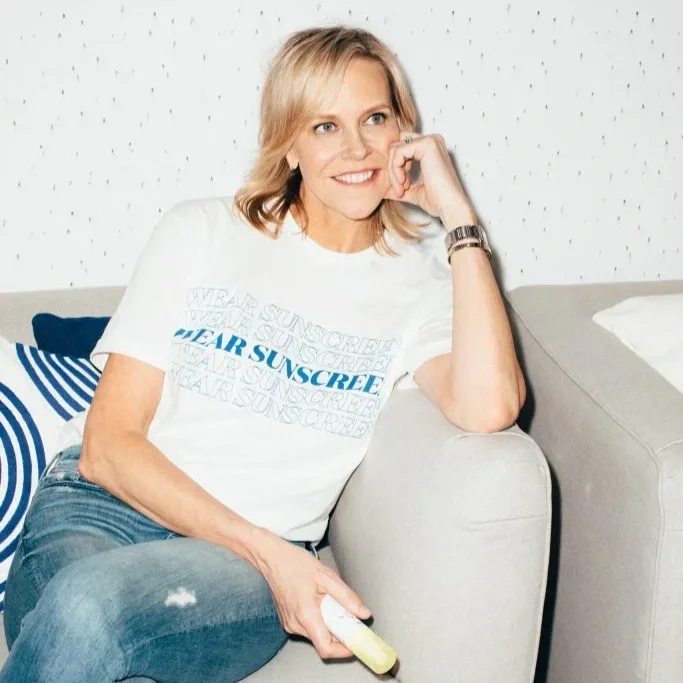
Holly Thaggard, founder of Supergoop!, joins the Double Take Podcast to discuss how she built a $700M skincare brand and transformed sunscreen from a seasonal product into a daily essential. What began as a mission to raise awareness in a stagnant industry in the early 2000s has evolved into a global leader, recently highlighted by a majority stake investment from Blackstone’s Growth fund that valued the company at $700 million. Through strategic community initiatives and a focus on education, Holly has successfully shifted the consumer perception of sunscreen from a seasonal afterthought to a daily skincare essential. An EY National Entrepreneur of the Year and the mind behind products recognized on TIME’s Best Inventions list, she is a master of both innovation and mission-driven growth.

Episode Transcript:
Lauren Stenger: Thank you so much for joining me today. I'm super excited to meet you and to learn from your really incredible career journey. I'm just really honored and excited to have some time with you. So yeah, I would love to kick off the conversation by going back to your early years and seeing if you've always kind of had this entrepreneurial mindset or do feel like that developed more recently?
In your adolescent years, did you have an entrepreneurial mindset, or is it something that you developed later? Did you see signals of your entrepreneurial spirit in your careers as a teacher and a harpist?
Holly Thaggard: Well first, thanks for having me. I'm super excited to be here. This is going to be a lot of fun and I love talking all things entrepreneurship. To answer your question, this is something from a very young age that was nurtured in our family. My parents are both entrepreneurs. They taught us from an early age to look for the whitespace in things and solve problems and make the world a better place. So I kind of grew up being a problem solver. Like when there was something that I felt like we could do better or do differently, the creativity in me just kind of started building and creating, and that's just something I've always loved to do. I think I had my first little business when I was like in fourth grade and I created signatures for everybody in the class and said this is how you have to sign your name. I mean I love handwriting, I always have. In fact, the Supergoop! logo is my handwriting. It's interesting because a lot of those little even earlier failed businesses contributed to things later in life.
Lauren Stenger: I feel like with most founders, you tend to see there's a thread where growing up throughout your adolescence, you kind of have an entrepreneurial mindset. I feel like it's something that is kind of always in the background. Did you notice parts of that back in your earlier careers as a teacher and a harpist?
Holly Thaggard: You know, yes, and I only taught for one year out of college, and I loved building thematic units around topics and categories. For me, that one year in teaching third grade was built around the rainforest and whether I was teaching math or science or reading, were doing it through the lens of the rainforest and which I was researching at the time and in terms of saving the rainforest. So you know, I always had that kind of drive to just make the world a better place and do things that have never been done before and solve problems.
Lauren Stenger: Yeah. And that's definitely what you've done with Supergoop!. So I would love to hear a little bit about the early days of Supergoop! by taking us back to the early 2000s. I know you've talked about this a lot, but for those who may not know, what kind of prompted those initial conversations about launching. Then, what was ultimately kind of the moment where you're like, okay, I'm going to do this and it's time to really go to market and do this.
What sparked the initial conversations around creating a brand, and then what was the catalyst to launch?
“My friend’s diagnosis with skin cancer, we were 29, is what inspired me to change the way the world thinks about sunscreen. ”
Holly Thaggard: My friend’s diagnosis with skin cancer, we were 29, is what inspired me to change the way the world thinks about sunscreen. And I really though thought back about my time in the classroom when he was going through this experience, and my good college roommate was doing her residency in dermatology. I said to her, how did this happen? We're 29? And she said, “Well Holly, it's not about beaches and bikinis. It's about that little bit of exposure every single day that's cumulative. And for most people, it doesn't turn into cancer until much later in life. For your friend, unfortunately it happened at 29.” He had blonde hair, blue eyes, and I do too. I immediately thought that this could have just as easily have been me because I was also spending my summers at the club and the pool and at the beach. When I dug in and looked at the category, I realized that people were only wearing sunscreen for three months out of the year. They were really literally only wearing it when they were either in bikinis or the beach.
So I became obsessed with creating a category that didn't exist and de-seasonalizing the sunscreen industry so that we could inspire everyone everywhere to wear SPF every single day. That really came from studying the category. I started looking at sunscreens at the time and they were very seasonal in the store and the retail. Literally they come out in May and then the stores would send all of the product back to the manufacturer in August.
“I became obsessed with creating a category that didn’t exist and de-seasonalizing the sunscreen industry so that we could inspire everyone everywhere to wear SPF every single day.”
It's crazy to think about now because today, know, fast forward in 2026 and we see SPF and we hear about it in the news every single day of the year. But it wasn't like that in 2005. It was incredibly seasonal. The only innovation in the category was how high the SPF number went. So you'd see a shelf of sunscreens and it was like SPF 15, 30, 50, 70, and 100. And there was no detection for UVA versus UVB. Every product on the market said high broad-spectrum protection, yet I knew also from the research that I was doing that the UVA ratio to UVB was not testing out in many of these formulas, but the FDA wasn't also regulating the monograph. It was just sleepy. Nobody paid attention to this category. And so I literally became obsessed with just creating formulas that had never been done before that would make sure that Lauren's not going to put them in the drawer in August and say that's done, and then only to pull them back out the following May or March for spring break.
“It’s one of the most difficult things ever, changing consumer behavior, particularly amongst adults. But when you’re successful at that, it’s because you’re inspiring that change”
So it was really something that I was trying to solve for and I feel like, you know, unless you can inspire people to change consumer behavior, it's one of the most difficult things ever, changing consumer behavior, particularly amongst adults. But when you're successful at that, it's because you're inspiring that change. And so I was only going to get there and de-seasonalize the category if people really wanted to start wearing sunscreen in October and November.
And then with that, I became obsessed with changing the media's perception of sunscreen and taking it out of just the summer books because social media really didn't exist back then. And making sure that the editors were educated and they understood that it is something that is so important even on cloudy, rainy winter days.
Lauren Stenger: Yeah, and you know, now sunscreen is in every makeup routine and skin routine, so it's crazy to think about a time where it was totally just overlooked and that's really amazing that you were able to identify such a whitespace and really, you know, go full force and really like change how we all perceive like the importance of sunscreen. It's crazy.
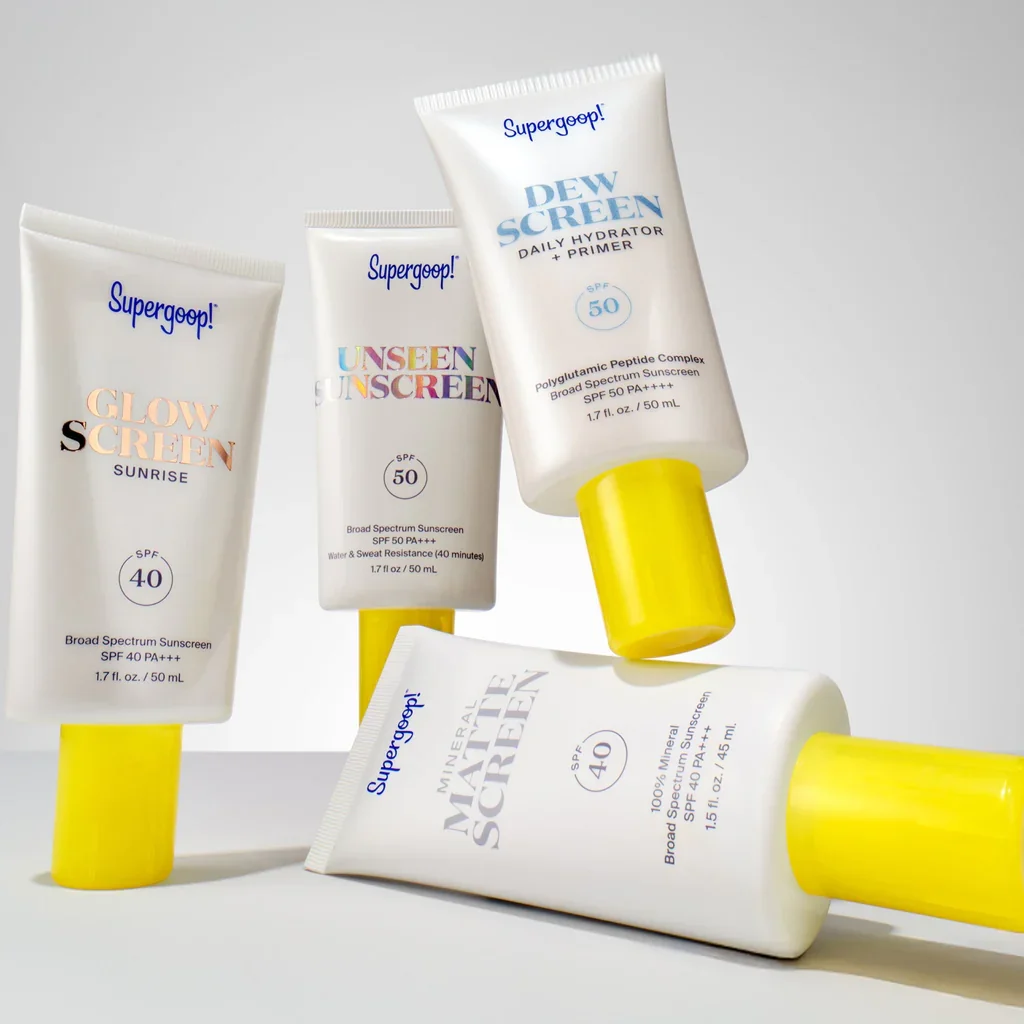
Holly Thaggard: Yeah, you know, of my favorite stories, our son is now 18, but he went to an all-boys school and he came home from school his first day of ninth grade and it occurred to me that he had never had a girl in his class before. By the way, he's going off to SMU next year and I think you've spent two years at SMU too. But he came home and I was like, “So tell me what it was like having girls in your class.” And he said, “Mom, they all just want Glowscreen.” It was one of the prouder moments of my career because you know, for a bunch of 14-year-olds to hit up my son for Glowscreen, which never would have happened in 2005. Nobody was talking about sunscreen, and they sure weren't talking about it at school. It was just a true testament to how we have created a category. We have changed an industry to be competitive in skincare. You know, truly changing that suncare to skincare.
“It was one of the prouder moments of my career because you know, for a bunch of 14-year-olds to hit up my son for Glowscreen, which never would have happened in 2005. Nobody was talking about sunscreen, and they sure weren’t talking about it at school. It was just a true testament to how we have created a category.”
Lauren Stenger: So when you were launching Supergoop! in your early days, it seems like there was a really big emphasis on educating the consumer because this was kind of a new category and taking like a bottom-up approach to get the narrative out there before really pushing the product. What was that process like and was that like an intentional business model or do you feel like that was kind of a natural intuitive step-by-step to change the perception and get the brand out there?
In the early days, you focused on laying the brand foundation through education rather than immediately pushing product. What was that process like?
“To change consumer behavior, it had to start with education around why SPF.”
Holly Thaggard: Yeah you know, I think for us, I recognized early that we had to answer the why SPF before we could talk about why Supergoop!. So education has always been at the foundation of this brand. Everything we do is centered around that, and we actually even had formulas around what percentage of posting on social media, you know, trickled back to education versus product versus playful, fun, clever, social. So, you know, it was really intentional always because to change consumer behavior, it had to start with education around why SPF? Why do I need it?
I mean, in 2005, even in 2011 I’d say, when we launched in Sephora, it was always, “You're never going to be competitive with skincare. You'll always just be that little SPF brand and that's okay. Just be number one SPF." I was always fighting for number 1 in skincare because I felt like if it's not protecting your skin, it's not skincare. And so, you know, it really has been always at the foundation of the brand to deliver the education first to lead with the education and talk about why UVA rays will never change the color of your skin, that they're damaging, and everything you don't like about your skin from fine lines to loss of elasticity to wrinkles to hyperpigmentation comes from sun exposure, and it comes from the UVA rays that will never give you a tan.
So the big question back then, rewind 10 years, was, but my skin doesn't burn so I'm okay, and not recognizing that a) it doesn't matter if it doesn’t burn, any change in the color of your skin is sun damage and b) UVA rays will never change the color of your skin and they're present on cloudy rainy days and 365 days a year all four seasons. So it's something that I think we were able to then fast follow with why Supergoop!, and Supergoop! intentionally looks at every single ingredient in the formulas and we cross out every single reason why you wouldn't want to apply sunscreen every single day.
“When we launched in Sephora, it was always, ‘You’re never going to be competitive with skincare. You’ll always just be that little SPF brand and that’s okay. Just be number one SPF.’ I was always fighting for number 1 in skincare because I felt like if it’s not protecting your skin, it’s not skincare.”
And so whether that's itching and irritation of your eyes to burning, you know, there's just so many reasons people had this bad negative connotation around sunscreen and what it would feel like. So we had to then share how we could be more mindful of ingredients and actually create formulas that you would want to apply every single day.
Lauren Stenger: Looking back is there a certain community initiative or any sort of program that Supergoop! has led that you're especially proud of or a favorite, anything like that?
Over the years, what has been a Supergoop! community initiative that has stuck with you?
Holly Thaggard: Yeah, absolutely. So my original idea for Supergoop! was to put it into school classrooms because I thought back about that time when I was teaching and I never once saw a tube of sunscreen on a school campus. And so what I quickly learned when I was launching the brand and working on that curriculum for pre-K through fifth grade to in a fun, playful way educate, I realized that sunscreen as an over-the-counter drug was prohibited on school campuses. It was thought of like Advil or Tylenol and you would never send your kindergartener to school with a bottle of Advil in their backpack, so therefore SPF could not be found in schools on campus aside from like the nurses station. And so I had to pivot and learn the business of retail as so many entrepreneurs have to do constantly. If you can't learn to pivot and change directions and always look at things half glass full, then you'll never make it in the world of entrepreneurship.
“If you can’t learn to pivot and change directions and always look at things half glass full, then you’ll never make it in the world of entrepreneurship.”
But I so I pivoted to retail and I learned the business of retail and I spent the next decade, you know, launching the brand and enter into Sephora and Nordstrom and Blue Mercury and all of the retail that we exist in today. But I did that through shifting gears. But while I was doing that, I also was advocating in D.C. for a change in policy to allow SPF on school campuses because it didn't take away just because I was selling the brand at retail. It didn't take away the fact that still need SPF on the school playground. We're sending them out there in the peak hours of the day and often after school and sports engaging and yet we're not giving them the means to which to protect their body's largest organ. And so this was still a problem.
“It didn’t take away the fact that still need SPF on the school playground. We’re sending them out there in the peak hours of the day and often after school and sports engaging and yet we’re not giving them the means to which to protect their body’s largest organ. And so this was still a problem.”
But as the brand grew and as the recognition grew, and as I was able to carve out policies statewide to allow SPF in schools, and I think now we're up to about 26 states that allow SPF on their school campus without a doctor's note. It is a super big passion project for me, but it really all came together so nicely because we had the retail to support funding a program like that and the Ounce by Ounce program at Supergoop!. Literally any school classroom or teacher can call Supergoop! and say send me a pump of Supergoop! and complimentary we will send it out to their school to put on that desktop so that those eight-year-olds have access to what they need during the school day to be safe. And that's the school's main job, is to keep the children safe throughout the school day. And that includes keeping their skin safe. So it's a passion project for me, and it has been for years. And it's one that I do hope the brand continues to nurture along the way, because children need access to SPF in schools.
“Literally any school classroom or teacher can call Supergoop! and say send me a pump of Supergoop! and complimentary we will send it out to their school to put on that desktop so that those eight-year-olds have access to what they need during the school day to be safe.”
Lauren Stenger: Wow. I love stories like that where, you know, entrepreneurship is directly serving a purpose and kind of helping change people's lives. So kind of going back to what we were talking about, about how you really had to figure out how to change consumer habit and learn how to implement something into someone's daily routine that isn't traditionally part of their habits.
So I'm curious if there are other ways in your own life that you habit stack or put things together, seemingly mundane habits that you kind of take a similar approach to glamorize?
Mixing sunscreen with makeup to consolidate those steps is a prime example of habit stacking. Are there other areas in your life where you are habit stacking?
Holly Thaggard: Yeah, innovation is at the core of the Supergoop! brand. And I think the reason behind that was that if we wanted the retailers to talk about SPF 12 months a year, we had to create formulas that you would want to wear every single day of the year. And so that meant that the innovation behind sunscreen had to extend beyond the number of the SPF and how high. I mentioned earlier, that's what SPF looked like. It was like SPF 15 or 100.
And so I started thinking about ways in which we could almost sneak that SPF into products that people were wearing every single day, whether that was our original CC cream, which was the world's first CC cream. It stood for Color Correction so that it actually color corrected the skin over time because it had such strong health benefits to it. But then of course it had that foundation built in, UV broad spectrum protection. So I've always kind of thought about things in my life and in the world of Supergoop! as how do we meet her where she already is, whether that's a powder or a resetting powder to take care of some afternoon shine on her face, how do we make that have SPF in it so that we can be a two in one? How do we put SPF into lipsticks, and colors, and vitamin C serums that usually break down when they're exposed to sunlight? So the innovation in the brand has always been the core and what we're known most for in delivering.
Of course, every one of our 42 formulas have SPF and UVA protection, but they also serve other purposes that allow her to, I think you said habit stack. I love that. I do think about things in my life like that. I'm an avid, like sauna and cold plunger. I have a routine in the mornings where, I have a sauna, steam, cold plunge. It's one unit altogether, and they're all three benefiting me in different ways. I do my twenty minutes, my three minutes and my four and a half minutes in the cold plunge, and I stack them all together. So it's not, do I really want to do a cold plunge today, it's like that group of things go together.
So I do kind of think about that in terms of those little bit of everyday habits that you can, with the right mindset, continue to embrace and get the benefits of that. Whether it's in how I get ready in the morning or how I structure the day. For example, we're podcasting in the afternoon, I have the most energy around four o'clock. It sounds crazy, but I also do, I won't even go into details, it makes me sound OCD.
Lauren Stenger: That's why I asked the question because I love maximizing and habit stacking and all of that.
Holly Thaggard: Yeah, it's great when you put things together that you know in your head, in your brain, that they're good for you and that you should be doing them. I do the same with red light therapy, and when I wind down at night before my bath, I do my red light therapy. So I intentionally kind of place things throughout the day so that they're actually things that are great for me, but they're enjoyable.
Lauren Stenger: Yeah, I'm the same. Putting your legs up on the wall is good for lymphatic drainage, so I'll do that while I’m journaling or reading and just try to maximize and try to be most efficient. That’s so interesting that you’re most energized around 4 o'clock.
Holly Thaggard: That's a good one. I'll have to write that down. I know, and what I didn't say was that I also do an afternoon cold plunge if I'm at home, and I can't do it obviously when I'm traveling and I'm busy. I find that like extra four minutes in cold 44 degree water is just all of a sudden I'm like, go, go.
Lauren Stenger: Yeah, I need to try the cold plunge.
Holly Thaggard: There's nothing like it. It's so amazing. You can become so addicted, and you just have to build up to it and then just do it. It's good for your mitochondria.
Lauren Stenger: Yeah, I know, I definitely want to try it. It seems you have to have a little bit of grit to do it.
Holly Thaggard: You have to have discipline and it helps if you have a really long song on your phone that you know that that song is four minutes long or three and a half minutes long and then you start to know when on the song you're about finished. Like that's last time I'm going to listen to that chorus because I'm about finished.
Lauren Stenger: So the past few years, it seems like you've had some big changes with your career with Blackstone acquiring Supergoop! and then you stepping away from the day-to-day operations of Supergoop!. So what is exciting you most about this new chapter of your life?
You have had big changes in recent years, with the Blackstone Growth fund acquisition and recently stepping away from the day-to-day operations. What excites you most about this new chapter?
Holly Thaggard: You know, it's a great question because I didn't dream after 20 years of dreaming about SPF that I was going to have chapter two. My father always said do things in two. So I'll throw that out there. But I also think I just love so much to build and create. I mean, Supergoop! is at a stage where it's a big company. It's a big brand. We have 150 people in place that are all doing way better at their job than I probably could. So it's time to get back into what I think my superpower is, which is building and creating and making the world a better place and solving problems that I see exist. And I have this really, I think, unique ability to spot problems. And so to be able to act on them and creatively build on them is something that I'm just really energized about doing.
“So it’s time to get back into what I think my superpower is, which is building and creating and making the world a better place and solving problems that I see exist.”
At this stage where Supergoop! is in its life, I'm cheering from afar and super excited to see what we're doing next, but I'm seeing that right alongside you, Lauren. And so I think, you know, 20 years is a long time to dream about SPF. So it's kind of opened my mind to dreaming about new things too and how I can best contribute to not only our family, but to the world.
Lauren Stenger: That's so exciting. And I'm excited to watch and see what comes next. Well, thank you so much for your time. I really enjoyed this conversation and learning more about you and your career journey. Thank you so much.
Holly Thaggard: Well congratulations to you Lauren on your podcast. This is so exciting on your upcoming graduation. Big steps, I think I would only add to that is just, know that it's all a journey. And so everything you're doing from this podcast that you're doing from you going from SMU to Cornell, these are all just part of your special journey and you're learning little bits and pieces along the way that are going to one day spark some kind of incredible idea. Embrace this fun time in your life because I'm certainly embracing this fun time and I'm you know, I'm in second phase of it. It's kind of fun when you look at it like that, that it's a journey and you're learning things that are going to contribute to your future.