Jacq Tatelman on STATE Bags and Social Enterprise
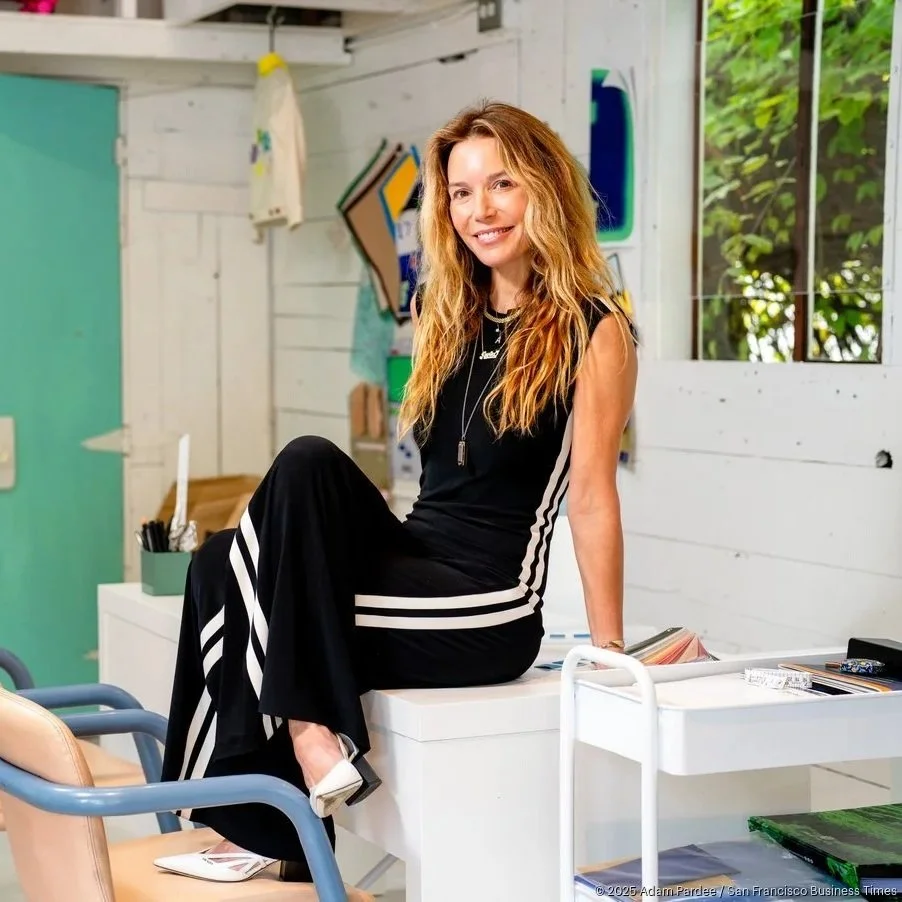
Today's episode is with Jacq Tatelman, the CEO and the co-founder of STATE Bags. STATE Bags is a social enterprise specializing in backpacks, travel bags, and accessories that blends the two worlds of premium retail and direct social impact. Since its founding in 2013, the company has built a business model around community engagement: every purchase helps fund programs that support children in need. Through large-scale school bag drop events, mentorship programs, and nonprofit partnerships, the brand has distributed hundreds of thousands of backpacks and supplies to students nationwide. STATE Bags has expanded through national retail partnerships, celebrity collaborations, and philanthropic campaigns, positioning itself as a leading example of a purpose-driven consumer brand. Tune in today's episode to learn all about Jack's journey with social entrepreneurship and leading STATE.
Conversation Transcript
Lauren Stenger: Well, thank you so much for being here with me today. I'm super excited to talk to you all about your career journey with STATE and all about social entrepreneurship. So to kick off the conversation, I would love to go back to the early days of creating STATE and hear about what was going on in your own life that prompted and sparked those initial conversations about bringing the brand to life and then ultimately the catalysts who launch it. So do you mind taking me back to those early days of STATE’s birth?
What sparked the initial conversations and vision around creating a brand, and then later on, what was the catalyst to launch?
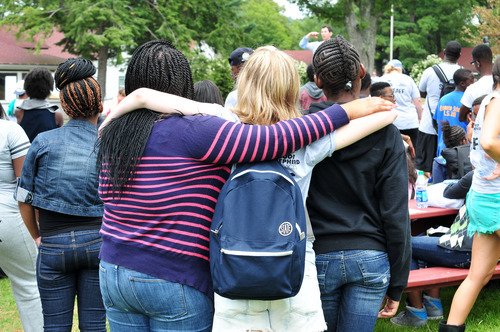
Jacq Tatelman: Absolutely. So my husband Scott and I actually started a nonprofit summer camp for inner city kids from Brooklyn, from East New York, Bed-Stuy, Brownsville, Red Hook, and a few neighborhoods in the Bronx. The first couple of summers that we were bringing them up to camp, we were bringing them up to this beautiful camping facility in a Tyler Hill camp in Pennsylvania. It was a fully funded one week program. And the first couple of summers, they were coming to camp with their stuff in garbage bags and ripped plastic bags, and we knew that likely this was everything they had because they were leaving for a week away from home and likely also living in foster care or transitional housing. It was a really challenging sight to see.
At the same time when they were coming up to camp, they were getting this really beautiful opportunity to just be kids, to like lay on their backs and look at the stars, to swim in a lake, to play tennis, to play basketball under the lights at night with no fear, and also living amongst these incredible role models and child development specialists, a team of people that we'd brought together to be the staff at camp. So they were having this really magical experience, but there was always this very tangible thing about how they were bringing their belongings around.
So Scott and I decided to start STATE as a true one-for-one, which is for every STATE backpack sold, we donate to American kids and families in need. We would do it through these incredible bag drop rallies, which would infuse that magic of camp, bringing in our Pacmen and Pacwomen who were some of our staff from camp, so child development specialists who had successfully risen from similar neighborhoods. We would have this incredible rally in homeless shelters, after school programs, wherever there was a need, we would go. The Pacmen and Pacwomen would share what they carry in their bag that has gotten them to where they are today in front of them, as this really incredible role model figure working for this great company. And the kids would share what was in their bags and they would dance and they would have fun. It was just a beautiful kids being kids moment that would culminate in them getting a brand new backpack that they would fill with supplies at our supply shop, which was in kind donations from like minded brands like Bombas socks and Kind snacks and a slew of colorful school supplies and healthy snacks and all sorts of things that would live in the supply shop.
So that's how we started and you that's the DNA of our business. That's where our brand was born from this experience, but we've really evolved since then. So now it's for every STATE product sold, we donate to American kids and families in need, but in the ways they need it most, which allows us to do so much more on the giving side. So for example, in the pandemic, we did virtual tutoring, we've done a travel academy where we took kids who had never left Brooklyn and brought them to California, kids who never left California and took them to Hawaii, just giving people the gift of life experience. And we really don't focus on working with big organizations; we focus on working with small populations of people where we can really effect change. That's really the origin story of STATE. But there's so much more to that evolution.
Lauren Stenger: It really sounds like the organic story as you're saying really was stemmed from a passion for giving back to others and giving back to your community, especially children who are at summer camp, which are some of the most magical days. You know, I remember growing up going to two week overnight camp and those are just some of the best nostalgic memories.
I'm curious about fashion and design kind of fit into this too? Growing up or in your early career, did you always have a passion for design and entrepreneurship? How did that kind of pair together with this passion for social enterprise and giving back?
Jacq Tatelman: So my mother had a clothing store in the basement of my home when I was essentially born. My father had a really incredible cut and sew leather business. He had three stores. My parents were always very fashionable people, super low key, like not, you know, in your face fashionable, but they just always had like a really cool, interesting taste level. And so I was raised in that environment. I always say I was raised in a rack of clothes because that's where I would play when I was little. I always loved fashion and I've always loved color, and not in a kind of typical way where I was like looking at what was on the runway or anything like that. It was more just this like ability to kind of absorb what was going on around me and to be able to kind of just marinate on that and like then bring it out in different scenarios like the way I dressed or you know even just like pulling together bags.
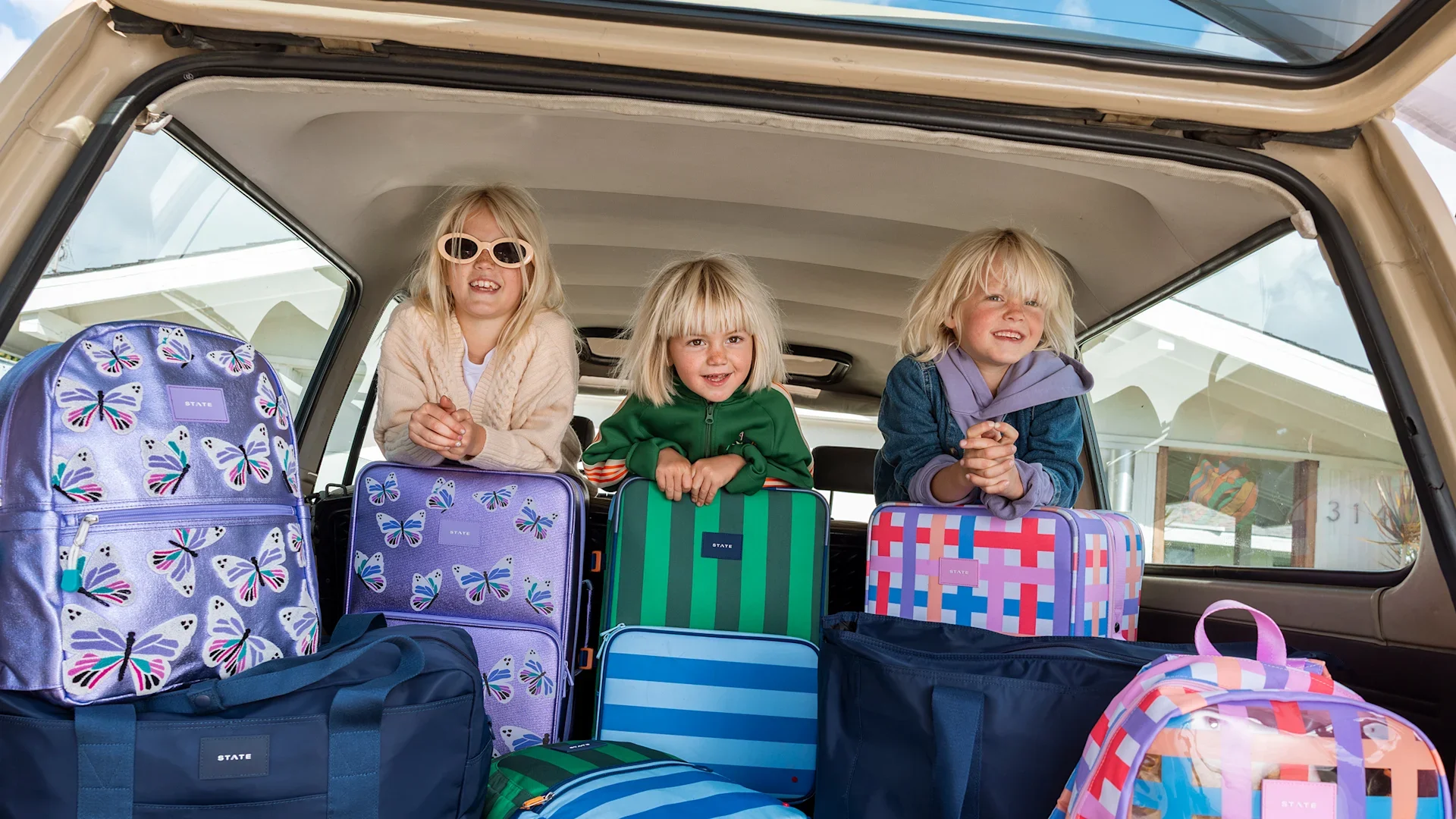
Because for STATE in particular, we're making this really great kids product, but there's a lot of dumb dumb kids product out there, dumb like character backpacks or bags that have like sequins all over them or whatever. And we really focus on taking that bit of fashion that we find like within ourselves that we love that we fall pieces that we fall in love with around the world, through the runway, all that stuff and infuse it into this kid's backpack or kid's luggage or whatever we're creating. And we make each bag look like its own individual work of art.
Lauren Stenger: My twin sister had a STATE backpack in high school. It was pink metallic and I'm pretty sure it was from like the kids collection, if I'm not mistaken. It was so chic and elevated and it was so cute.
Jacq Tatelman: That's the goal. When I was living in Brooklyn, we first had kids, that's when we launched STATE, when I was pregnant with our first child, and so I never took a maternity leave or anything like that. Like two days home from the hospital, had a design meeting in my living room. We grew up kind of like, you know, becoming parents with this family bag brand and really learning what people want and what people need. We would see these dads in Brooklyn with these beautiful suits on and then they'd have this big Elsa backpack, you know, and I was like, I want to make something that actually looks cool with that suit, that actually you feel like, all right, that guy's super sophisticated and gets it. And like, want his kids bags to feel that way too, you know? So we really try to look at everything with a really sophisticated eye and making sure that we're elevating and really pioneering in the space. Because before us, there really was nothing like this in the market. Now people are totally running after and chasing what we do. But we were the originators of making backpacks super fun and exciting.
Lauren Stenger: Totally. And when you go on the website or you're looking at the product, that really speaks for itself. So I'm sure the design process is definitely really important for you, and I'm sure it takes a lot of time and energy. So do you mind kind of walking me through what the design process looks like when creating a new bag? What kind of sparks the idea for a new product and how does that kind of go through the stages to develop?
What does the design process look like when creating a new product?
Jacq Tatelman: There's some more technical stuff that happens from the business side. First of all, I have an incredible design team. There's three other people on the team aside from me, and they are so talented beyond. Like I said, we get some information funneled down to us about what needs to be made in this particular season, whether it's a new color way of a style or a new style completely. But if we are designing a new style completely, it's so much fun. We have a huge archive of different shapes and silhouettes that we have loved from the past. We have about 300 Pinterest boards, including that archive. And we always just kind of like go into the market and like look and see what's going on. What are people doing? What are they making? What's interesting? What color stories? We have a lot of trend reports and stuff like that and then we come together and say, okay, so this is what everyone is doing out there. Let's just say we're creating a new diaper bag, right? Like what are the diaper bags out there look like? And we'll go through like a hundred pages of diaper bags, and then we're like, all right how do we flip this on its head? But give it the same utility and functionality that a parent needs in order to be able to have a really great diaper bag that's like their best friend, which is what happens with bags these days. We're mobile offices; we're taking our bags with us everywhere. And so when you think about the end use, you have to think about all the functionality and you need still make sure that it's like a good bag for people to use. But when it comes to the design of it, we're like, all right, how can we make this nothing like what anyone else is doing?
And how do we make it like have its own language and have its own kind of ability to stand out there in the market and for people to be like, wow, not only is that a cute bag or a great looking bag, but it also functions beautifully. So we go through that whole process in several rounds of sketches and ideas. And then another round of working through colors and all that sort of stuff. And then we play for like days essentially on just one bag sometimes. Sometimes it's like, how do we nail the zipper color? And then it goes through more of a typical process of design where you're presenting it to the team, presenting it to the merchandising team, presenting it to the sales team, presenting it to the marketing team. And it goes through several different iterations and sample rounds. Then we finally land on what we love. However, we do not make anything we do not love. So sometimes our collections get very small, which is okay because we have to believe in it and love it in order for it to be out in the market because there's so much competition and people are getting flooded constantly with stuff. And so if it's not something that's a wow piece, it really can fall flat.
Lauren Stenger: So has there been a time where you've gone through all the stages of development and you have the final product in your hand, but it just doesn't feel right to put out there?
Jacq Tatelman: Yes. It's hard for my team. They get so mad at me, like we're anticipating this and now we're not doing it, but in the end it's always the right decision. Because if we don't love it, we can't talk about it. You know, we can't brag about it. I love when people come to me and they're like this huge tote, oh my god, it's the best weekend bag I've ever had, the pockets, this and that. If I put something out there that really would fall flat, I would just always feel that when I looked at the product.
Lauren Stenger: My next question kind of has to do with times in your life where you feel like creativity and inspiration may be a little bit lower because it seems like to create a really beautiful high quality bag, you need to have like a source of inspiration and those creative juices. So what do you do in those times when that might be feeling a little bit dull and how do you reignite that inner creativity?
How do you reignite your inner creativity when it is low?
Jacq Tatelman: I am like a sponge for inspiration. Anywhere I go, I wanna pull something from what I'm seeing, whether it be like a color or a shape or a texture or something like that. I really walk around with my eyes wide open and really absorb all the things around me. But at the same time, I've been living in Brooklyn for long and inspiration is truly everywhere. You know, you just see the way people are wearing their hats, how they're put a brooch on their jacket how they did this how they did that and you're like, wow, like I can reinterpret that I can do whatever.
Now I'm living in the Bay Area and I love my life, but it is not New York. I find it a lot harder to get fashion inspiration there. I go to as many stores as I possibly can, but I'm a toucher, I like to like see what's going on. And I also like to see what's on markdown. I like to really understand what's going on in the market. My options are very slim in the Bay Area, in proximity to my home. So I really am finding myself going to the ends of the earth on the internet a lot of the time. And I know that it's not good because I am on my phone, but I'm trying to move myself, you know, like I'm trying to find something that is like an aha. So it's a lot of exploration in that way.
Also now I've really started to look at different books, interior books, fashion books. I had all these books in my house that were just like beautiful decor on our shelves and now I'm just like ripping through them for like all sorts of inspiration because I just I'm hungry for it. I'm listening to this great book, and one of the things he said is that, all designers kind of live and die by these Pantone books, but it's really important to step outside and see that there are thousands of shades of green, and I really like take to that. That really like means something to me.
Lauren Stenger: What's the name of the book that you're reading?
Jacq Tatelman: It's Rick Rubin's book, The Creative Act, A Way of Being.
Lauren Stenger: So next I would love to talk about your journey with leadership over the course of bringing STATE to life and leading the company. So can you think about an unexpected lesson that you have learned from this leadership journey?
What is an unexpected lesson you have learned from as CEO of STATE?
Jacq Tatelman: Well, first and foremost, I never thought I was going to be CEO of this company. As I've shared, you know, I am a creative. But you know, when I think back also to my upbringing, my father was an entrepreneur, with first his leather business, and then he built this really successful medical business. And so, you know, he and I would talk about business more than I even realized when I was younger. So it's sort of also a sponge for learning in that respect, but I never thought that this would be the path that I would be on as CEO. We went through a few CEOs where it just wasn't the right fit for the company. They both brought really great stuff to the brand and to the business, but in the end, it really didn't work out. And I just felt like after having those different experiences that maybe it was time that I just stepped in as CEO. And so right before the pandemic, February of 2020, I took over as CEO of the company. I had no idea what I was doing. I still feel like I have no idea what I'm doing, but I'm so open to learning in the process.
One of the sayings that my family always used to say is never make the same mistake twice. And that's not like a hundred percent perfect science, but I'm so kind of maniacal about the mistakes that I make and then like taking the time to reflect back on them and thinking of what I could have done better or different in the moment. I still do make the same mistakes twice, but it's definitely something that I live by is like understanding what I did wrong and like, or what was wrong with the process and/or the strategy and how can I improve that both for me and for the team? That's definitely a big piece of how I lead.
And then also just like actually letting go and trusting myself. I still struggle with that sometimes too, but I'm definitely stronger in understanding what my gut instinct is and being comfortable with it being my gut instinct, and not really having to have much weigh in from other people to validate that instinct. Those are some big pieces of the learning process for me of being the CEO.
Lauren Stenger: Yeah, I'm sure it was super daunting and overwhelming to become a CEO in February 2020. That was probably a really difficult few years, but definitely speeds up the learning process.
So I am really interested in STATE’s, relationship and involvement with social entrepreneurship. I think it's such an interesting concept and not a lot of companies do that. So I would kind of like to hear about how leading an organization like this has impacted your outlook on life. I know that's super broad, but I'm sure through all these projects you guys work on, you have really had some perspective shifts. And if there's a particular or recent project that was particularly moving for you.
How has STATE’s hands-on social entrepreneurship changed your personal worldview, and is there one specific project that has stayed with you?
Jacq Tatelman: Work and life, and work and life together are hard. Real life, like adulting is really hard. And I am often kind of totally entangled with work, you know, trying to grow a brand and a business. It's very challenging to do that in today's climate. I think the fact that we do all of this stuff on the social impact side is what fuels me on the day-to-day basis. I think sometimes, can I do this anymore? Can I keep going if there's a particular situation going on? Like I said before we even started, this is my favorite thing to talk about STATE Bags. It's literally my favorite thing. It's another child of mine and I literally love it. But it's hard, so some days I'm like, my god, this is so taxing. But then I remember like, if we get to this level, if we get to this point, we can allocate this much to do this really great thing that we do. And the work that we do, like I said before, how we don't work with these national organizations, but rather actual pockets of humans.
Scott, my husband, I also mentioned this, he runs all of our philanthropic efforts. He's incredible at this and he builds those beautiful projects, things that you really are so proud to see it's mind-blowing what he's capable of doing because again, he actually builds projects that change lives. I think about this nonprofit summer camp that we ran for so many years and now we're running on the West Coast and it's just so inspiring. It really fuels me to keep going because I'm watching kids change, and then I see them throughout the school year and they're different and they're growing and they're changing and they're talking about camp, and they're talking about what it meant to them and their parents are talking about camp and how it changed their children's perspective and how they have this different attitude and you know it's not always a perfect science but like there is change that's happening and I feel very strongly that that is so intrinsic to our DNA and a huge piece of our success personally because it's just one of those things that really helps us thrive when times are really challenging.
Lauren Stenger: Is there a recent project or maybe an upcoming project that you guys are working on that you are particularly really excited to see the impact on?
Jacq Tatelman: I'm excited to see summer three of Camp Made for Me on the West Coast. That's the one week summer program that we run. I am really proud of past projects as well. The other thing is that the camps are just so unique to like life in general, you know, giving the opportunity of camp. You know, in particular, we built that camp on the East Coast called Camp Power and it stopped after 17 summers. And some of the kids who were campers are now adults in the world. And when they heard that we were running this camp on the West Coast, now they're able to be staff. And their whole thing is that Camp Power changed my life, and I want to give that back. I want these other kids who will likely never get an opportunity like this to experience what I experienced. And that is a magical kind of circle that happens. And I feel very, very proud of that.
I also feel very proud of the tutoring program Scott put together in the pandemic. That was actually really major as well because so many kids were falling behind, particularly kids in some of these more challenging areas of the world, where they didn't have the funds to be able to just get a tutor. Supporting them through that phase was also incredible. And the travel academy that we did where we brought kids from Brooklyn to California, and they all have a different perspective on life now because they saw the other side of the country, which is like, you know, in the US and being on a cliff and like overlook this incredible vast ocean and just experiencing all these really life changing things, that has made such an impact on these kids. So all of the things that we've done have been moving to me, but I do believe that camp is the big thing and I am really looking forward to summer number three.
Lauren Stenger: That is so powerful and such like a beautiful combination of giving back. As what you were saying, I'm sure it is really moving to see these kids grow up over, you were saying like 17 years, you can really shape someone's life as they're growing up in their adolescent years. I'm sure it's a super full circle moment to see them come back, want to be staff and contribute to this movement. So that's really cool and like so inspiring.
Jacq Tatelman: Thank you. I agree. It's very inspiring.
Lauren Stenger: So shifting gears a little, when you are not working on running STATE, helping with these really awesome initiatives, when you have a day free on your calendar, which probably is rare, how do you like to fill that time?
How do you like to fill your time when you’re not working on STATE?
Jacq Tatelman: It's interesting this question because it's changed over time. Living in Brooklyn, I would say that it was really just about like calming my body down, calming down my nervous system. So doing things with my family, I'm an avid exercise human, I love to work out. I really care about health and fitness and all that sort of stuff. But my life now is very interesting because we are immersed in nature in such a way that I've never been before. I never was a nature person. I remember when we first moved and I asked some people like, wow, are you really outdoorsy? They're like, yeah, very outdoorsy. Meeting someone for coffee means like going for a walk and stuff. And I was like, whoa, am gonna succeed here?
But I feel that being in nature has really changed the way that I exist in the world. It really grounds me, it fulfills me, and I love my community. I love my friends in California. I feel such a release when I can just like see my friends, and go for a hike or meet for a glass of wine on the ridge, and watch sunset or just go down to the beach in the winter, even though it's a little windy and put out a blanket and just hang out together. I find that the exposure that this state of California brings to me has really just given me a new perspective on life completely. I really enjoy that. But also I am consistently looking at fashion, and I love to shop, and I love to vintage shop in particular. So I do that a lot as well. I love the East Bay for vintage shopping. So that's kind of how I spend my time just being when I'm not consumed and working 24/7 for STATE.
Lauren Stenger: I totally agree with that, the Bay Area is so special.
Lauren Stenger: So my last question for you is, I know it's a little bit cliche, but I'm 22 years old so I like to ask people this. If you could go back in time and talk to your 22 year old self, is there anything you would want to tell them or reassure them about?
If you could go back and tell your 22 year old self a piece of advice, what would it be?
Jacq Tatelman: You know, yes, there is so much I would say to my 22 year old self, and to you, and to anyone else who would care to listen about. There are going to be so many versions of you, 22 on, you have like barely even scratched the surface of who you're going to become. And so I would just breathe into the moment and really just try to learn the act of acceptance and learn to trust yourself. Learn about yourself. What do you like? What don't you like? Really tuning into your own body and your own mind and just trusting the process and trusting that you have a path. Because then when you get into your 40s, you know, you really you see yourself you're like, wow, you know because there's this vision when you're 22 like who am I gonna become? What am I gonna do? What's my career gonna be? Then kind of when you get into your 40s not for everybody, this is just my experience, but you kind of are who you are like your career is in full motion. You're possibly a parent. You're possibly a wife or a husband and a lot of things have happened to you throughout the course of this time. And so, you know, it's an incredible thing to kind of get ahead of that and just believe in yourself and breathe into the phase of life that you're in, and know that you're on a path and that there's always change around the corner. But I really believe that self confidence is king and that you can do anything if you're really, truly confident in yourself. So I would really focus on that piece of who you are is, and trusting and loving yourself.